
Packaging tape helps keep cartons closed during storage, handling, and shipping. The right choice depends on the carton surface, the package, how the tape will be applied, and the conditions the shipment may encounter. A tape that works well on one box or packing line may not work as well on another.
This guide explains common packaging tape types and what to consider when choosing tape for corrugated boxes. For heavy, fragile, or unusual shipments, confirm the packaging design with your packaging supplier and carrier.
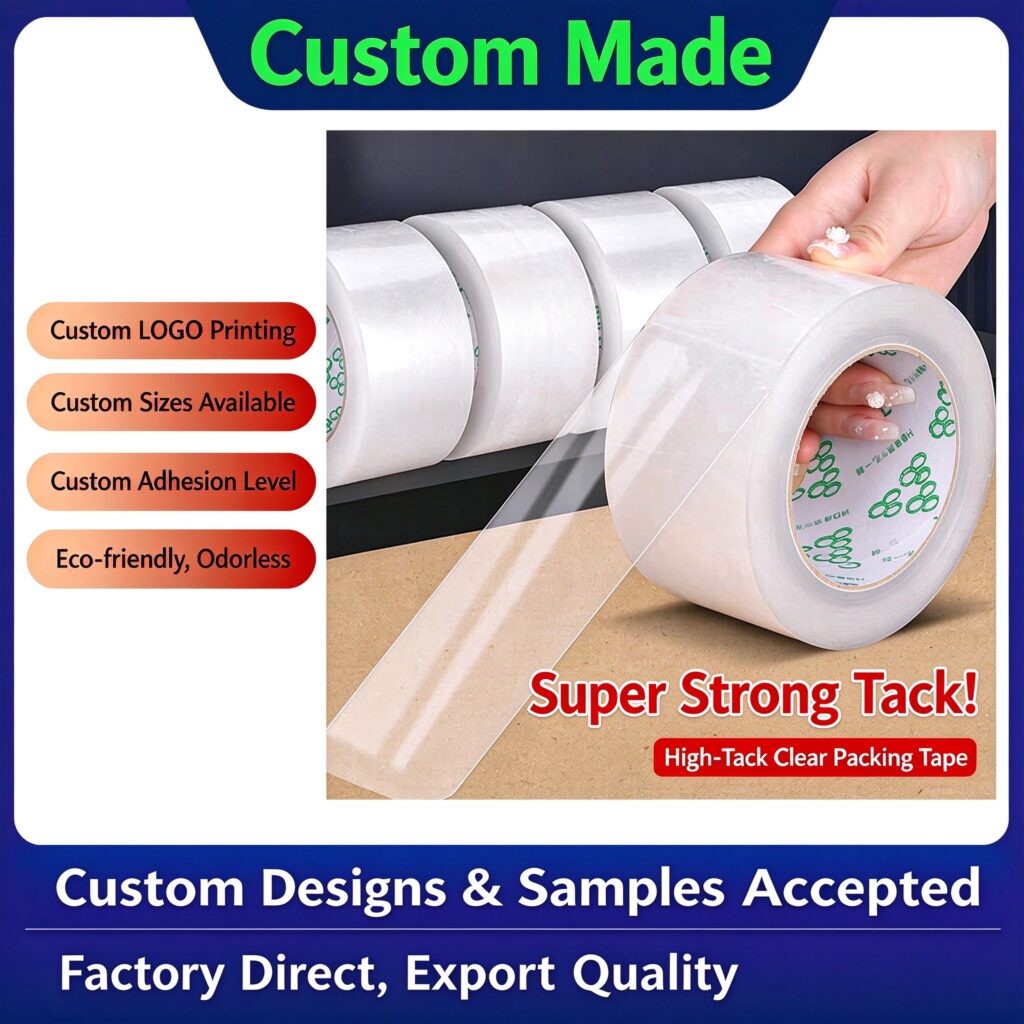
What Is Packaging Tape?
Packaging tape—also called packing tape, shipping tape, or carton sealing tape—is used to close or reinforce packages. Carton sealing tapes commonly use a film or paper backing with an adhesive. Some tapes are pressure-sensitive and stick when pressed onto the carton; water-activated paper tape uses an adhesive that is activated with water.
Tape is one part of a complete packaging system. Carton size, board construction, product weight, cushioning, and the shipping route also affect whether a package is suitable for transport.
Common Types of Packaging Tape
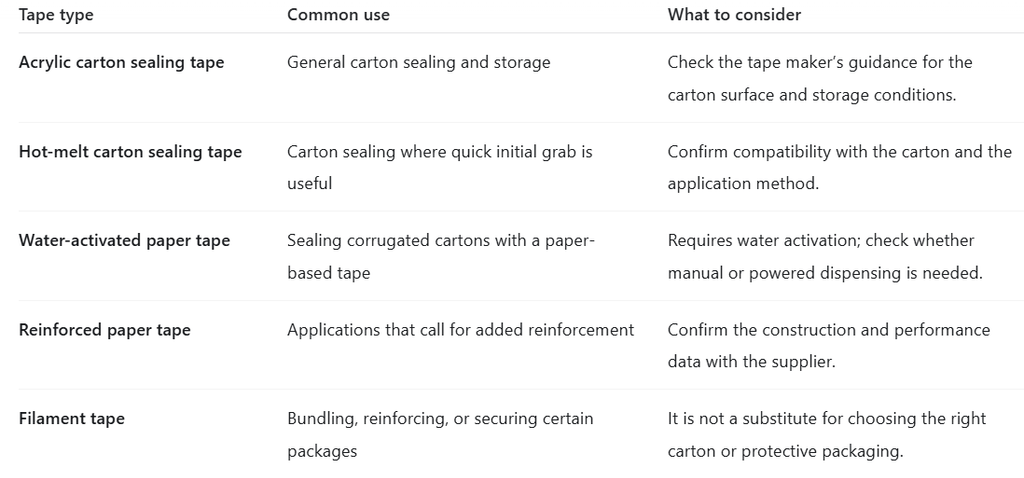
Adhesive and backing descriptions can vary by manufacturer. For example, 3M describes acrylic tapes as pressure-sensitive adhesives and notes that its hot-melt tapes use a synthetic rubber adhesive; its water-activated tape bonds when moistened. These are product-family descriptions, not a performance guarantee for every tape. Always check the specific product data sheet before selecting a tape.
How to Choose Packaging Tape?
Before choosing tape, answer these questions:
1. What carton are you sealing?
Consider the carton material, surface, printed areas, and condition. Recycled or coated surfaces may behave differently from other carton surfaces. If the carton is dusty, damp, damaged, or poorly assembled, address that condition instead of relying on tape alone.
2. What is inside the package?
The package’s size, weight, shape, and fragility all affect the packaging system. Tape cannot compensate for an undersized carton, weak box construction, insufficient cushioning, or excessive empty space.
3. How will the tape be applied?
For occasional packing, a hand-held dispenser may be practical. Higher-volume packing operations may use different dispensers or case-sealing equipment. Check that the tape width, roll dimensions, and core fit the dispenser.
4. What conditions will the shipment encounter?
Storage and transport conditions can affect tape performance. Consider the expected handling, temperature, humidity, storage duration, and shipping route. Ask the tape supplier which product is suitable for those conditions and request product-specific data where needed.
5. Is the seal suitable for the shipping route?
Carrier instructions can vary. Check the requirements for your shipment type and destination, especially for heavy, fragile, regulated, or unusual items.
How to Seal a Corrugated Box?
A common method for closing a carton is the H-taping method:
1、Close the carton flaps.
2、Apply tape along the center seam.
3、Apply tape across the two open edge seams, forming an “H” pattern.
4、Press the tape down so it contacts the carton surface.
5、Repeat on the bottom when appropriate for the package and carrier instructions.
DHL and Purolator describe H-style taping in their packing guidance. Their instructions also emphasize filling empty space and using a box suited to the contents. Follow the specific carrier and product requirements for your shipment; the H pattern alone does not certify a package for transport.
Common Packaging Tape Mistakes
- Choosing by appearance alone. Clear, brown, or printed tape color does not tell you whether it suits the carton or shipment.
- Ignoring dispenser compatibility. Check tape width, roll diameter, and core size before purchasing.
- Using tape to compensate for a poor box fit. Excessive empty space or a carton that is too small may require a different box or internal protection.
- Assuming one tape works for every application. Adhesive and backing requirements vary.
- Treating a taped carton as automatically shipping-ready. The whole package—including carton, cushioning, closure, and handling route—matters.
Packaging Tape FAQs
What is packaging tape used for?
Packaging tape is commonly used to close or reinforce cartons. The right tape depends on the carton, the application method, and the conditions the package will encounter.
What is the difference between acrylic and hot-melt tape?
They use different adhesive systems and may suit different applications. Compare the tape manufacturer’s product data and recommendations for your carton and operating conditions.
Is paper tape suitable for corrugated boxes?
Some paper tapes are designed for carton sealing, including water-activated types. Check the product instructions, activation method, and compatibility with the carton.
How do I choose tape for a shipping carton?
Start with the carton material, package weight and dimensions, application method, shipping conditions, and carrier requirements. Ask the tape supplier to confirm the suitable product.
Do I need a tape dispenser?
Not always. A dispenser may make repetitive hand application easier. For higher-volume operations, compare hand-held, bench-top, or machine dispensing options according to tape and workflow requirements.
Choosing the Right Corrugated Box
Tape works as part of a packaging system. If you are sourcing a custom corrugated box, share the product dimensions, packed weight, order quantity, and shipping requirements with your packaging supplier. These details help the supplier assess the carton style and specifications.
Explore Taiwei’s corrugated box range or contact the team to discuss a custom box requirement.