
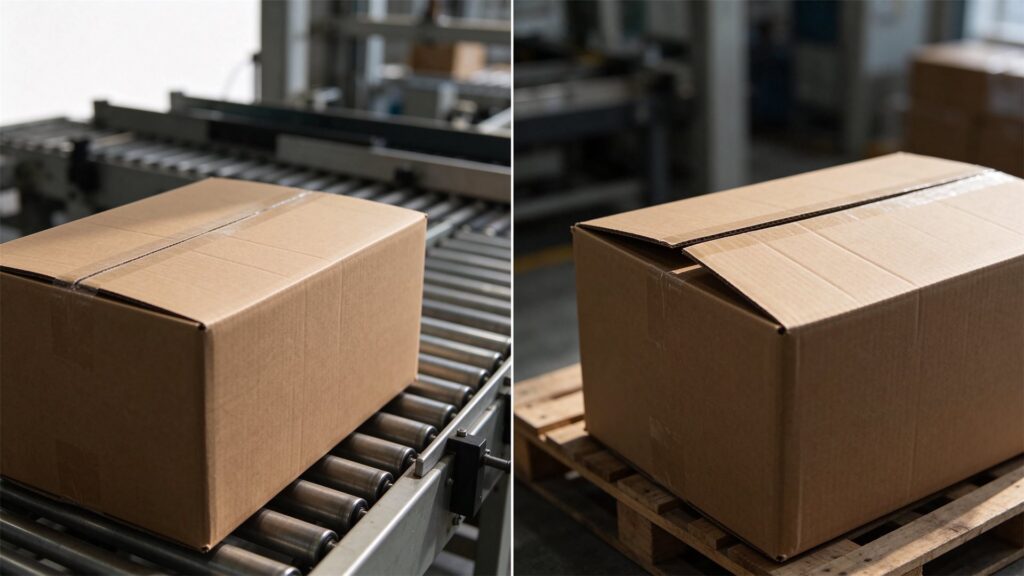
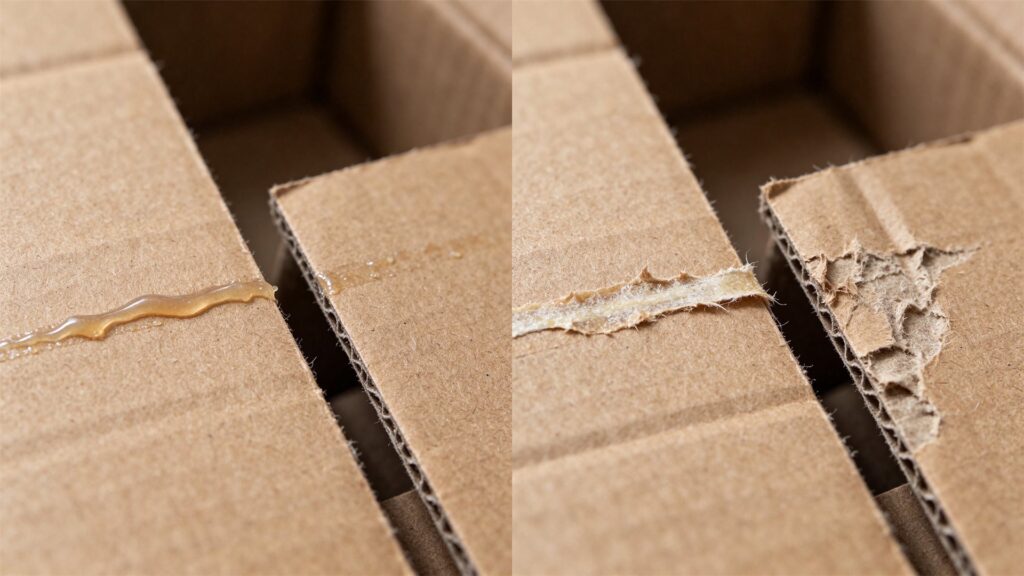
Imagine a batch of corrugated boxes leaving the sealing line with their top flaps lying flat. At the receiving dock, several boxes have popped open at the same corner. One has a rounded bead of adhesive on one flap and almost no glue on the opposing surface. On another, torn paper fibers cover the glue line and the box corner is visibly crushed.
Both boxes arrived open. The first points toward a problem with glue transfer or compression. The second calls for a look at the board and the loads the box encountered. When hot melt carton sealing fails, examining both sides of the joint can help you decide whether to adjust the line, change the box, or investigate the shipping route.
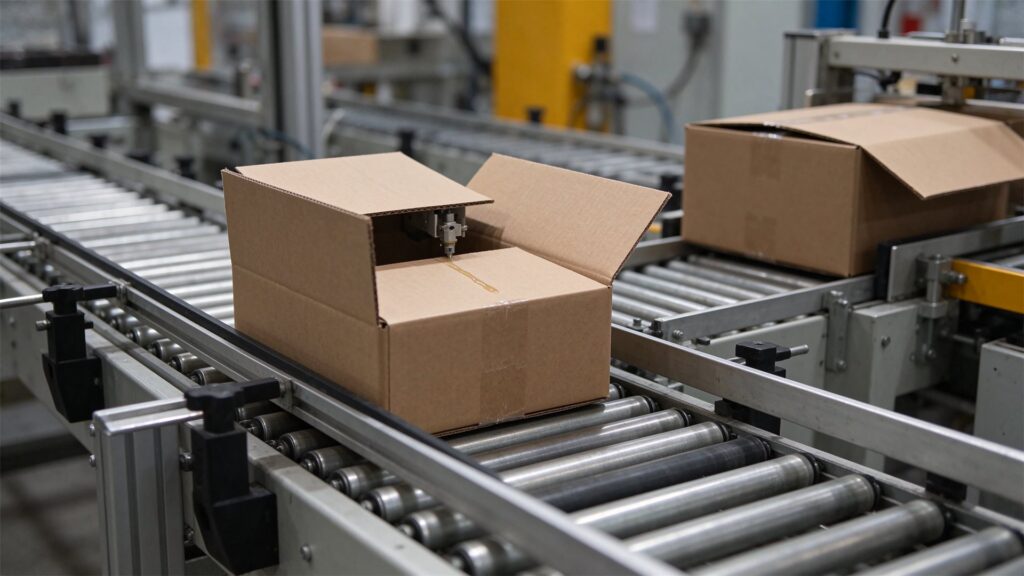
Table of Contents
- How the adhesive bonds the flaps
- What glue and paper traces reveal
- How to store adhesive and condition empty boxes
- What happens to the seal in transit
- How to document and reproduce a failure
- Environmental impact and cost per intact delivery
- Frequently asked questions
- What to check when sampling corrugated boxes
1.How Hot Melt Carton Sealing Works
On a regular slotted corrugated box, the two outer flaps meet at the center. In a typical hot melt carton sealing setup, the outer flaps bond to the inner flaps where the two layers overlap. A flat top tells the operator the flaps are in position. Opening a sample shows where the adhesive landed and how much reached the opposing surface.
A typical thermoplastic packaging adhesive contains a base polymer, a tackifier, wax, and an antioxidant. The polymer and tackifier help determine flexibility and adhesion to the board. Wax affects flow and setting, and the antioxidant helps the adhesive withstand heat during processing. When specifying hot melt carton sealing, give the adhesive supplier the line conditions and the temperatures the finished joint will face in distribution.
| Timing on the line | What happens at the joint | What to check |
|---|---|---|
| From dispensing to effective compression | The adhesive needs enough time within its open window to spread and wet the opposing paper surface. | Measure the delay to the first point where the flaps are firmly pressed together. Open a sample and check adhesive transfer. |
| From compression to release | The adhesive cools and builds enough initial strength to hold the flaps against their tendency to spring back. | Watch which corner lifts at the exit. Check how long pressure is applied and whether it reaches the glued area. |
Suppose the nozzle is 60 cm upstream of the first effective compression point. At a steady line speed of 18 m/min, the glue bead reaches that point in about two seconds. Slow the line to 12 m/min and it takes about three seconds. If the compression section is fixed, the slower speed also gives the bond more time under pressure. A speed change can therefore help one part of the process while making another harder. Measure both intervals before deciding whether it improved the seal.
2.Hot Melt Carton Sealing Troubleshooting on the Line
When hot melt carton sealing failures cluster around a shift, a box size, or a particular corner, keep one failed box and one apparently sound box from the same batch. Label them with the production time and box lot. Photograph the corresponding areas of both flaps so you can compare what was applied with what transferred.
| What you see after opening the flaps | What to investigate first |
|---|---|
| A rounded bead on one flap and almost no glue on the opposing surface | Check that the bead falls inside the overlap. Measure the delay to compression and check board temperature, application settings, and flap contact. The glue may have set early, or the flaps may have received too little pressure. |
| Adhesive on both flaps, with the glue layer split through the middle | Establish when the separation appeared. For failures at the line exit, check compression time and whether a guide or transfer point moves the joint before it has set. For failures seen at receiving, also review temperature exposure and loads on the flap. |
| Torn paper fibers stuck to the glue line | Inspect the paper surface around the joint. A crushed corner, bulging sidewall, or damp board gives you a reason to check the box, its contents, and its position in the load. |
| A continuous glue mark on one side of the box and missing sections on the other | Check whether the nozzle is dispensing consistently, the trigger fires at the right point, the box tracks straight, and compression reaches the full glue pattern. |
Fiber tear shows that the paper failed in the area examined. Look at where it occurred and how much of the intended bond area it covers. For a hot melt carton sealing trial, keep an unchanged sample and change one main variable at a time. That makes it easier to tell whether an adjustment improved transfer, reduced flap movement, or addressed a different problem.
3.Storage Preparation for Hot Melt Carton Sealing
On a winter morning, empty boxes come straight from a cold storage area. The first few show poor glue transfer, and the line starts producing sound seals once warmer boxes arrive. For a hot melt carton sealing line with this pattern, measure the board temperature at the flap overlap. Cold paperboard can draw heat from a thin glue bead quickly, even when the melt tank display shows its usual setting. Keep the first boxes and later samples together so you can compare the glue lines.
Check solid adhesive and molten adhesive at different points:
- Close opened packages as the supplier directs and keep the pellets or blocks clean and dry. If glue skips begin after a bag change, check the opened package, the refill container, and the nozzle for debris.
- If failures appear right after a refill, record the tank level, addition time, and first affected boxes. Adding a large amount of cold pellets to a nearly empty tank can briefly cool the molten adhesive. Compare the bead before and after replenishment. Follow the equipment and adhesive suppliers’ standby and refill procedures.
A first-box check for hot melt carton sealing should record the adhesive lot, box lot, board condition, and machine settings. When paper or surface finish changes, sample the actual overlap area. The glue may be meeting a different liner, a printed area, or a coating even if the new box has the same external dimensions.
4.What Happens to the Seal in Transit
A hot melt carton sealing joint already has to hold against flap springback when it leaves the compression section. In transit, shifting contents, a distorted sidewall, or a corner impact can add load to the same joint. Look at the route and the location of the opening together.
- Heat during transfer or storage. Some thermoplastic adhesives can soften while a shipment sits in a hot trailer or container. A flap that keeps pulling on the joint can gradually move. Inspect the loaded end of the joint and check whether the packed box remains closed during the expected high-temperature exposure.
- Cold storage and unloading. Some grades lose flexibility at low temperatures. A marginal joint can open when the box is handled or struck while cold. Check the sealed box before cold storage and again under the handling conditions it will face at unloading. Use your own board and packed configuration to evaluate a freezer-grade adhesive.Henkel’s freezer-grade carton sealing example
- Humidity, stacking, and product movement. A box can arrive with a lifted flap and a bowed sidewall. Moisture affects the compression performance of corrugated board, and a change in box shape can change how the joint is loaded. Check the box’s pallet position, indentations, and where the contents ended up before deciding which part of the pack to test first.
5.How to Validate Hot Melt Carton Sealing in Transit
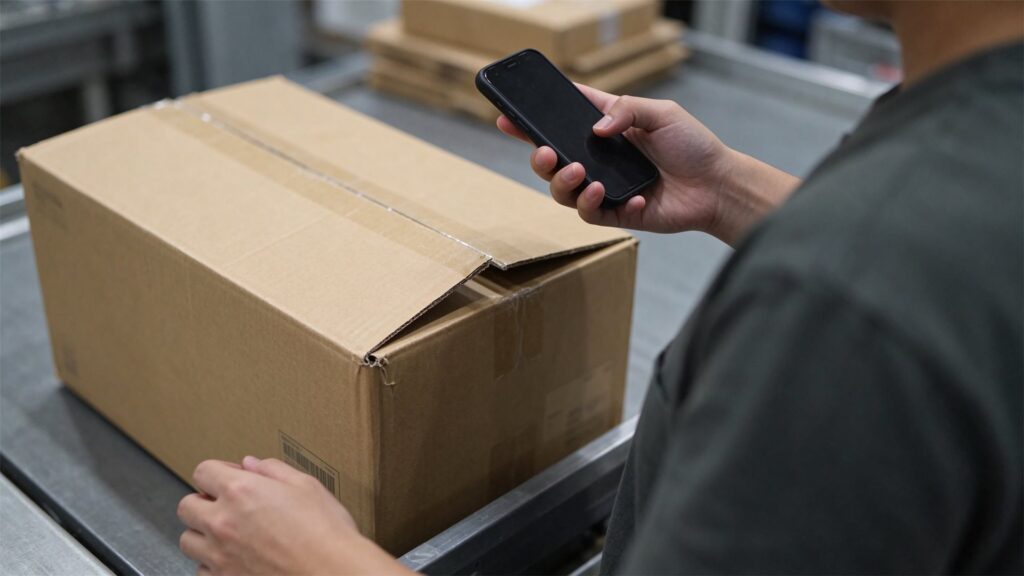
For a hot melt carton sealing complaint, photograph the entire case and the open corner before handling the flaps. Record the number of affected boxes, the lot, and where each box sat on the pallet. At receiving, check product count and condition under your normal procedure. Hold an affected box in its original state for troubleshooting where practical. That preserves the adhesive traces, damage to the board, and position of the contents.
For a controlled comparison, seal several boxes per group from the same board lot with the same machine settings, packed weight, and product arrangement. Set acceptance criteria before the trial. Agree on how you will measure a flap gap, what distortion is acceptable, and how you will check product movement.
| Group | What to do | How to use the result |
|---|---|---|
| A. Ambient baseline | Hold filled, sealed boxes under agreed ambient conditions. | If the flap already opens here, start with the board surface, bead placement, and line settings. |
| B. Route temperature and humidity | Expose matched samples to the relevant heat, cold, or humidity. Observe the seal and box shape at the agreed inspection point. | If B develops an opening while A stays closed, check how the environment affected the adhesive, board, and joint. |
| C. Route conditions plus handling | Condition samples as in Group B, then apply handling loads relevant to the route, such as vibration, drops, or stacking. | If B stays closed and C opens, inspect where the load was applied, whether the contents shifted, and how the corners and sidewalls deformed. |
This comparison helps troubleshoot the failure. For formal distribution testing, select the procedure that fits the shipping method and packed product. Individual parcel delivery, palletized freight, and less-than-truckload distribution can expose a box to different sequences of handling and load.
6.Environmental Impact and Cost per Intact Delivery
Compare hot melt carton sealing options per 1,000 boxes delivered intact. Alongside adhesive used per box, record test shots after restarts, rejected boxes, resealing supplies, and replacement shipments. If several boxes need resealing because the glue lands outside the overlap, moving the bead into the right position may reduce adhesive waste and rework at the same time. Confirm the change on filled boxes under the shipping conditions you expect.
For a recyclability claim, assess the complete packaging specification. The adhesive grade, amount, and application all matter, along with coatings, laminates, and labels. The 4evergreen guide discusses adhesive compatibility by application and paper recycling process. Use the actual box construction and the relevant collection and recycling system when evaluating a claim for a particular market.
7.Hot Melt Carton Sealing FAQ
Can one hot melt carton sealing adhesive cover both ambient and frozen distribution?
Ask the supplier for the grade’s application conditions and recommended service conditions. Then test each route using the intended board, packed weight, and handling sequence. The temperature at the nozzle governs how the adhesive is applied. The temperature in the warehouse or vehicle governs what the finished joint must withstand.
Will applying more adhesive keep the flaps closed?
First check where the bead landed and what transferred to the opposing flap. If the bead sits outside the overlap, correct its placement. If both flaps carry glue and the joint moves right after compression, check setting and compression time. When the samples show too little coverage within the overlap, adjust the amount within the supplier’s and equipment’s recommended range and repeat the comparison.
Can we keep the same settings after changing board or box suppliers?
Use the existing settings as a trial baseline. Seal samples of the old and new boxes on the same equipment and compare adhesive transfer, coverage in the overlap, and flap position at the end of the compression section. Check changes in the liner surface, score lines, and flap dimensions. These can affect adhesion, springback, and the area available for bonding.
8.What to Check When Sampling Corrugated Boxes
For a new corrugated box, verify hot melt carton sealing at three points. At the line exit, open a sample and inspect glue transfer. Before dispatch, keep a reference box and record the board and adhesive lots. At receiving, check the flaps, corners, and contents together. If a flap has opened, the original box and the marks on both mating surfaces will help you decide what to test next.
When requesting a custom corrugated box, share the product dimensions, packed weight, packing method, sealing equipment, flap overlap, and expected shipping route. If you already have a failed box, send photos of the corners and both flaps so the box design, board, and sealing area can be reviewed during sampling.Explore Taiwei’s corrugated boxes · Contact Taiwei about a corrugated box sample