
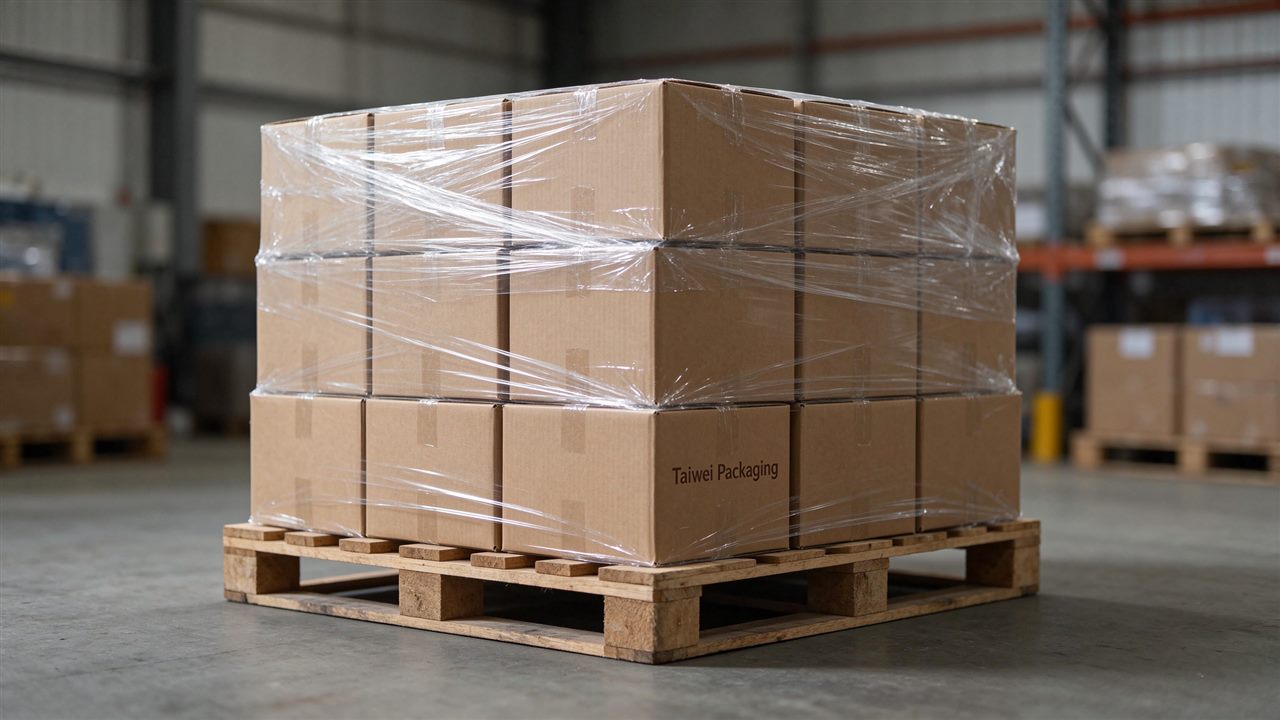
A pallet of cartons arrives with its pallet stretch film intact. The cartons still line up with one another, but the entire stack has slid several centimeters across the pallet. Before changing the film or turning up the wrapper tension, compare the bottom row with the pallet edge in the dispatch photo. Movement between carton layers points to one set of checks. Movement of the entire stack relative to the pallet points to another. ( Lantech’s guide to pallet load slip.)
This guide follows one product, machine-grade cast polyethylene stretch film, from extrusion and roll delivery to machine setup, purchasing, and receiving. The opening scenario illustrates how a receiving team can trace a failure back to the point where it started.
Indholdsfortegnelse
- What are the main types of packaging film?
- How to read a pallet stretch film specification
- How should you store and handle pallet stretch film rolls?
- What should buyers give a distributor before requesting samples?
- What changes when you adjust pre-stretch, tension, or film layers?
- How do you compare pallet stretch film cost per pallet?
- Where should you look when cartons shift in transit?
- How do you turn receiving results into acceptance criteria?
- Ofte stillede spørgsmål
1. What Are the Main Types of Packaging Film?
Start with the job the film needs to do.
- Pallet stretch film holds stacked cartons together. The film is applied under stretch, and its tendency to recover helps contain the load.
- Heat shrink film tightens when heated. For a beverage multipack, ask for machine-direction and transverse-direction shrink percentages at stated test conditions. Shrink force also matters if the pack can deform.
- Food cling film covers containers or wraps suitable foods. Check which foods it can contact, the permitted time and temperature, and the instructions for microwave use.
- Bag-making and form-fill-seal films are made into sealed packs. Check the seal and barrier properties required for the contents.
- Lidding and vacuum skin films close a tray opening or fit closely around the product. Match the film to the tray and the intended sealing and opening conditions.
Polyethylene describes a material family. A purchase specification also needs to describe how the film will be applied and what the packed goods must withstand.
2. How to Read a Pallet Stretch Film Specification
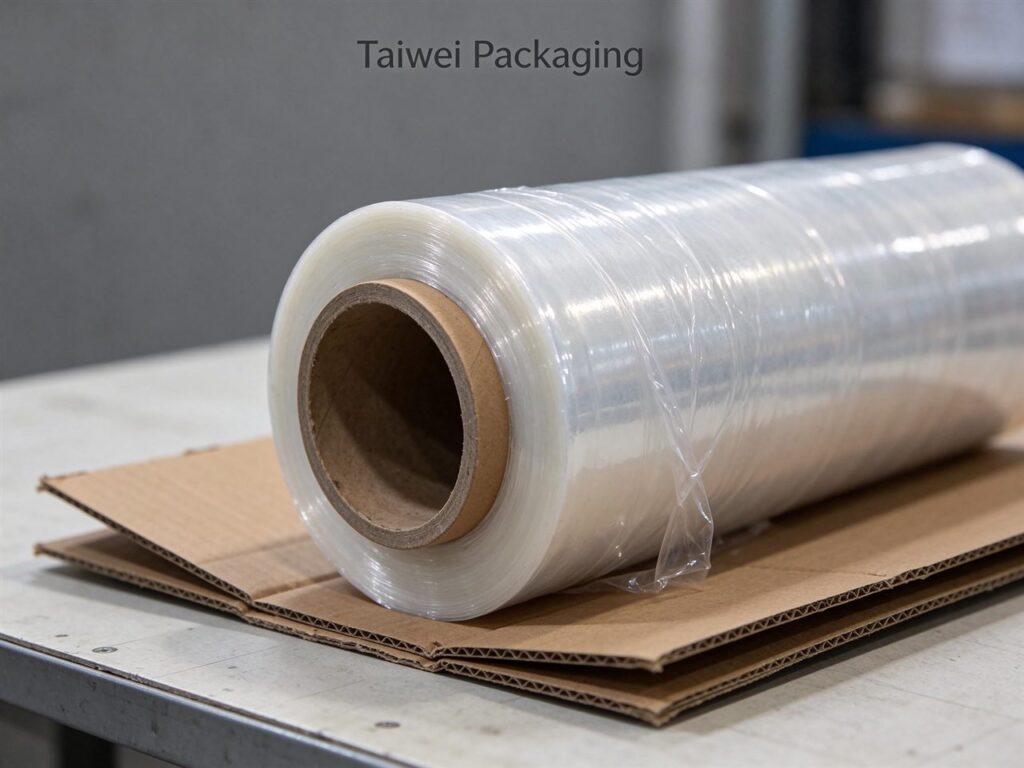
Cast film is made by extruding molten polyethylene through a wide die, cooling it on a chilled roll, and then slitting and winding it. The finished film must unwind evenly, stretch through the machine, pass over carton corners, and cling where layers overlap. Two films with the same nominal thickness can behave differently at any of those points.
Read roll dimensions first. Signode’s 20RHC501 is an example of a specific machine-grade film. Its published specifications list a nominal thickness of 20 µm with a ±10% tolerance, a width of 500 mm, a roll length of 2,000 m, an outside diameter of 250 mm, a core inside diameter of at least 76 mm, and inside cling. The nominal thickness and tolerance give a specification range of 18–22 µm. Agree on the sampling and measurement method before using that range for incoming inspection. (Signode 20RHC501 product specifications.)
Core diameter, roll diameter, and width determine whether the roll fits the wrapper. The cling side affects threading and overlap. Roll length and net film weight help compare quoted rolls. Ask whether a quoted weight includes the core.
| Parameter | What it tells you | What to check |
|---|---|---|
| Elongation at break (%) | How far a specimen stretches before it breaks | Compare the same test method, units, and specimen direction. MD means machine direction, and TD means transverse direction. |
| Film pre-stretch rating (%) | The pre-stretch conditions specified by the supplier | Confirm whether the figure is a recommendation or an upper rating, and check wrapper compatibility. |
| Puncture resistance | How the film resists being pierced by a protrusion | Compare like-for-like test results, then run an actual carton with a projecting corner. |
| Peel cling | The force needed to separate two overlapping layers of film | Confirm which sides were tested and whether the film was stretched or unstretched. |
| Load containment force (N or lbf) | The restraining force measured on a wrapped load | Compare the same points and elapsed time after wrapping, using the same method. |
Film tests can help select samples. The pallet trial answers a separate question: how the film, wrapper, cartons, and stacking pattern perform together.
3. How Should You Store and Handle Pallet Stretch Film Rolls?
A roll may pass through a distributor’s warehouse before it arrives at the packing line. If a shipping case is struck during handling, the rolls next to the damaged corner may have compressed edges. That damage can show up later as a tear that starts on the same side each time the film unwinds.
Stop the wrapper according to its operating procedure and locate the first tear. If it begins as the film leaves the roll, inspect the roll edge and shipping case. Compare it with an undamaged roll of the same grade under the same operating conditions. If both rolls unwind normally but tear at the same carton corner, inspect the stack profile and film delivery settings.( Lantech’s wrapper operating guidance.)
At receipt, photograph the damaged case, mark where the affected roll sat inside it, and retain the lot number. Keep spare rolls in their original packaging under the supplier’s storage conditions. A cluster of damaged rolls in one crushed case gives the distributor a different lead from repeated failures across several cases and machines.
4. What Should Buyers Give a Distributor Before Requesting Samples?
Give the distributor the wrapper model, accepted roll width and core diameter, and current pre-stretch and film delivery settings. Describe the pallet dimensions, loaded height and weight, and any projecting corners or cartons that crush easily. Ask for the film grade, nominal thickness and tolerance, roll length, net film weight, cling side, and recommended starting conditions.
Request samples of pallet stretch film for two representative loads: a routine pallet and a harder one, such as a tall stack with projecting carton corners. Keep the approved sample label and record the grade and settings used in the trial. If a later shipment behaves differently even though the nominal thickness matches, those records give you a basis for comparison.
5. What Changes When You Adjust Pre-Stretch, Tension, or Film Layers?
Pre-stretch happens in the film carriage before the film reaches the load. Signode illustrates its 280% figure for the example grade by showing one meter of film extended to 3.8 meters. The added length is 2.8 times the original length. This figure describes the film’s extension in the pre-stretch step.
Film tension at the load describes how tightly the wrapper applies the film to the cartons. The number of layers at each height depends on overlap and the wrap pattern. Two loads can use the same pallet stretch film and pre-stretch setting while receiving different coverage near the top. If only the upper cartons shift, inspect the upper layers and any torn sections before increasing tension across the whole load. Higher tension can put additional pressure on carton corners that are already deforming.
For a comparison, record the wrapper settings and inspect the top, middle, and bottom. If you measure containment force, use the same method, positions, and elapsed time after wrapping for both samples.
6. How Do You Compare Pallet Stretch Film Cost per Pallet?
Wrap a representative load with the current film and record the settings and results. When both films and the wrapper allow it, keep the cartons, pallet, stacking pattern, and settings the same for the replacement film’s first trial. If the new film needs different settings, run a second trial and change one setting at a time. This shows whether the film can run under current conditions and what changes it needs to meet the agreed requirements.
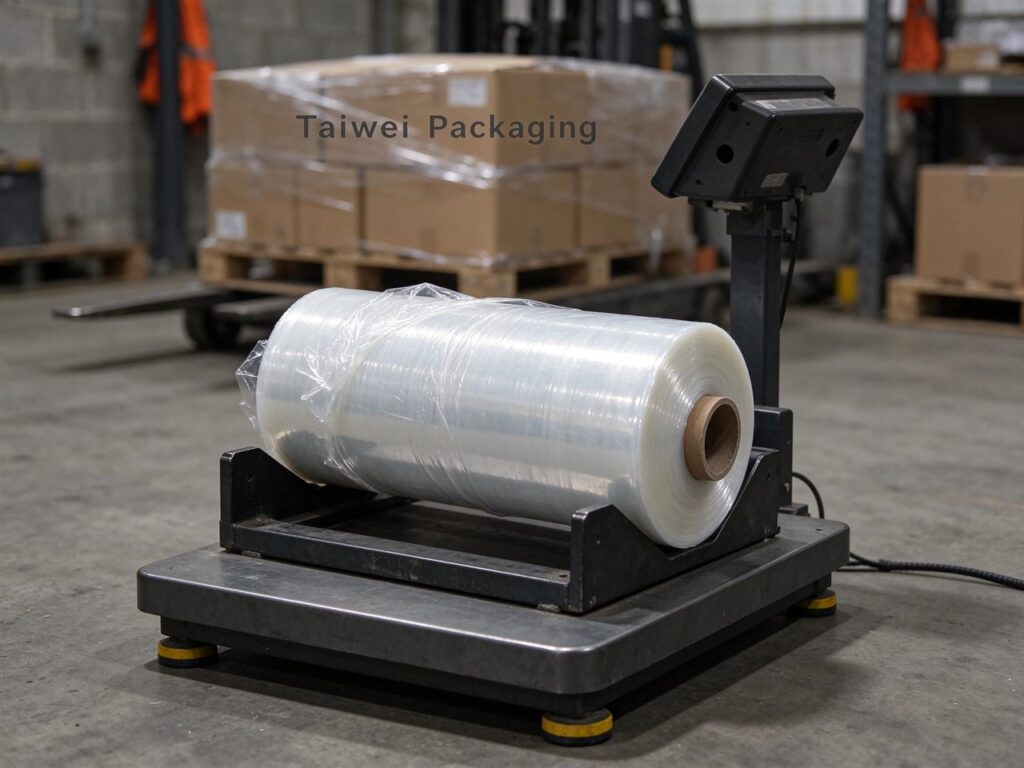
To measure film use, weigh the same roll before and after a trial and divide the weight difference by the number of completed pallets. Record film lost to breaks and rewrapping. Separate routine and tall loads if their film use or failure rates differ.
For example, at CNY 12 per kilogram and 300 g per pallet, the current film costs CNY 3.60 per pallet. At CNY 14 per kilogram and 240 g per pallet, the replacement costs CNY 3.36. Both figures are illustrative. Compare costs once both options meet the same acceptance criteria, and account for stoppages and rework.
7. Where Should You Look When Cartons Shift in Transit?
Take three receiving photos: the whole load, the bottom row against the pallet edge, and a close-up of the damage. Compare them with dispatch photos when available.
| What you find | Where to look first | How to check |
|---|---|---|
| Only the upper cartons are out of line | Upper film coverage, overlap, and torn corners | Repeat the handling comparison after checking the upper wrap pattern. |
| The stack has shifted together across the pallet | How the bottom of the load is secured to the pallet | Compare bottom-row alignment before and after handling, then retest after adjusting load-to-pallet attachment. |
| A corner is crushed, or film tears repeatedly at one point | Carton overhang, projecting edges, and local pressure | Check carton support and stacking first, then compare corner protection or compatible wrapper settings. |
For the opening scenario, keep the film, cartons, and pattern the same and check the load-to-pallet attachment first. Keep forklift access clear under the site’s handling procedure. A warehouse comparison can help identify the cause. When the distribution route calls for further verification, choose appropriate handling or vibration tests for the complete pallet load.
8. How Do You Turn Receiving Results into Acceptance Criteria?
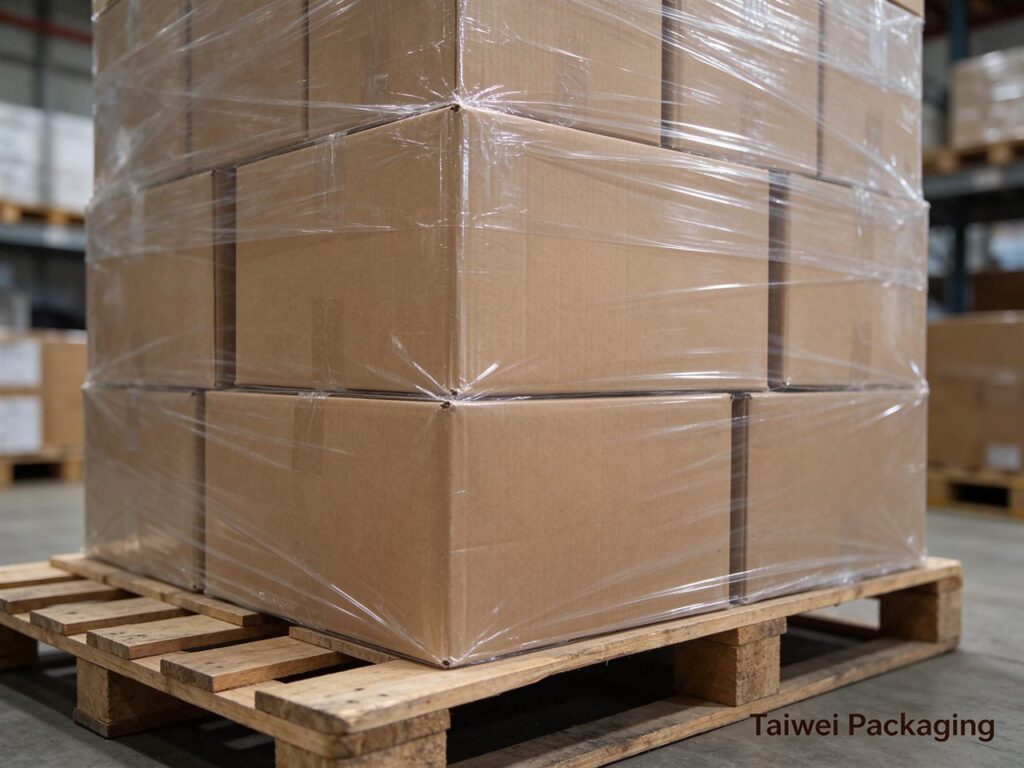
Agree on the pass conditions before trialing pallet stretch film. Define which pallet configurations to test, how they will be handled, and what amount of movement or carton damage is acceptable. Break the checks into three handoffs.
- Incoming rolls. Confirm the grade, lot, and dimensions. Inspect the shipping case, roll edges, and core.
- Dispatch. Record the pallet configuration and wrapper settings, then photograph the bottom row against the pallet.
- Receiving. Check movement, film tears, and crushed corners against the agreed conditions. Record the location and how often the issue occurred.
Use this trial record:
Film grade and lot | Carton and pallet configuration | Wrapper settings | Film use per pallet | Dispatch and receiving photos | Agreed pass conditions | Result and follow-up.
If damage keeps appearing on one tall stack configuration, review its wrapping and handling conditions first. If rolls from one lot tear at the edge across several machines, share the lot number, a sample roll, and close-up photos with the supplier.
9. Frequently Asked Questions
How do pallet stretch film and heat shrink film differ?
Stretch film is applied under stretch and uses its tendency to recover to contain the load. Shrink film is placed around the product and tightened by heat.
Is pre-stretched film the same as a wrapper’s pre-stretch setting?
Pre-stretched film has already been stretched before delivery. A wrapper’s pre-stretch setting governs how its film carriage stretches the film during application. Check the film’s equipment requirements before setting up a trial.
Can I use elongation at break as my machine setting?
Use the film supplier’s recommended operating conditions as the starting point. Elongation at break is a laboratory result measured at specimen failure. The machine trial also needs to check film breaks, carton deformation, and load movement.
Will a thicker film stop repeated tearing?
Find the first tear. A damaged roll edge points to incoming inspection and handling. A tear at the same projecting carton corner points to local load shape, film puncture performance, and wrapper settings. Rerun the same load to check whether the change solved the problem.
Conclusion
A useful pallet stretch film trial connects the roll specification, wrapper settings, film use, and the condition of the cartons at receiving. When the film is intact but the pallet load has moved, the dispatch and receiving photos show where to start.
If trials keep finding crushed corners, unsupported carton bottoms, or tearing at the same edge, share the outside carton dimensions, packed weight, and pallet layout with your carton supplier. Use those details to review the box design and run another comparison on actual packed cartons. Explore Taiwei’s corrugated box range.