
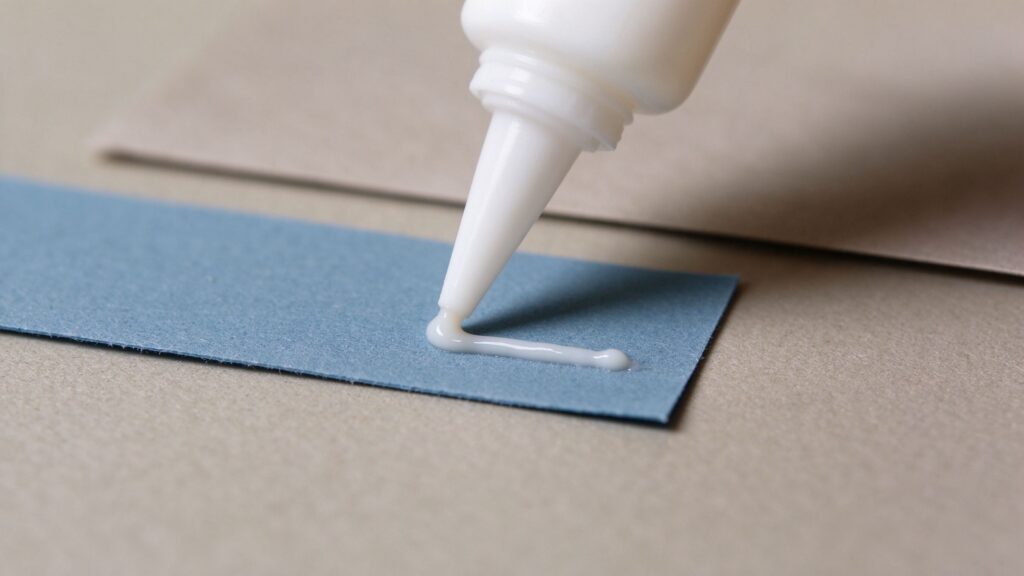
Squeeze a line of white glue onto a paper cutout. It holds its shape long enough for you to set the bottle down, spreads when you press the cutout onto a card, and leaves a nearly clear line where a little glue reaches the edge. All three observations tell you something about how the glue was made.
PVAc white glue is a water-based adhesive built around polyvinyl acetate. The manufacturer has to make or source a stable polymer dispersion, give it the right flow for the intended use, and check how the finished glue behaves on the materials it will actually bond. A craft bottle, a woodworking adhesive, and an adhesive for machine-applied paper converting can start with related chemistry and still have different jobs to do.
Sisällysluettelo
- What Is in PVAc White Glue?
- Five Steps From Reactor to Bottle
- How to Read a White Glue Technical Data Sheet
- What Happens Between the Two Sheets of Paper?
- Environmental Questions Worth Asking
- Frequently Asked Questions
- From the Glue Bottle to the Bond
1.What Is in PVAc White Glue?
PVAc, or polyvinyl acetate, is the polymer that forms the adhesive film in this type of white glue. In the bottle, fine polymer particles are distributed through water. A second polymer, PVOH, or polyvinyl alcohol, can help stabilize those particles during the manufacture of the dispersion. Both names matter because craft packaging often uses the shorthand PVA glue. Bostik, for instance, describes its bottled craft glue as a waterborne adhesive based on a vinyl acetate homopolymer and polyvinyl alcohol.
The wet dispersion looks milky because the fine particles scatter light. As water leaves, the particles pack together, deform, and can merge into a continuous film under suitable drying conditions. A formulation designed to dry almost clear scatters less light once that film has formed. This is the change you can see at the edge of the paper cutout. The dried appearance varies with formulation and film thickness.
2.Five Steps From Reactor to Bottle
A plant that makes its own dispersion can carry out the full sequence. A glue formulator can also buy a commercial PVAc dispersion, qualify incoming batches, and start at the finishing stage. Here is how the process works for a bottled paper craft adhesive.
1.Prepare the water phase
In a PVOH-stabilized process, the producer prepares the aqueous phase with the protective polymer and charges it into a stirred reactor. The stabilizer helps keep the growing PVAc particles dispersed. Its grade and amount can also affect the way the finished dispersion flows. For a squeeze bottle, the formulator needs a glue that passes through the nozzle with a comfortable squeeze and stays where it is put long enough to position the paper.
2.Meter in the ingredients and control the reaction
The initiator starts the conversion of vinyl acetate monomer into polymer. In a staged-feed process, the producer meters ingredients into the reactor while monitoring temperature and mixing. The feed schedule helps manage both reaction heat and the amount of unreacted monomer present at a given time. A published example using a three-litre laboratory reactor held 65–80°C during a specified feed stage. That range describes the documented laboratory run. A commercial plant sets its own process conditions for its formulation and equipment.
3.Finish the reaction and cool the dispersion
After the main feed, a producer can run a finishing reaction to reduce the amount of residual vinyl acetate monomer, then cool the dispersion. Residual monomer is a process outcome a producer can track alongside physical properties such as solids and viscosity. This stage matters because a smooth-looking white dispersion and a measurement of residual monomer answer different quality questions.
4.Formulate for the way the glue will be used
The base dispersion is blended to meet the finished product specification. Depending on the grade, the formulator may adjust the flow, control foam during mixing, or choose additives that change how flexible the dry film feels. The target comes from the job. A craft glue has to come out of a small nozzle and spread over a cutout. A paper-converting adhesive may need to transfer consistently from a machine applicator at production speed. Those two requirements can lead to different formulations even when both use a vinyl acetate-based dispersion.
5.Check the batch and fill the bottles
A release check can start with the liquid’s appearance and measured properties, then move to the finished package. A practical check for craft glue is to dispense it through the intended cap, spread it on the target paper, and examine the dry film and bond after a defined interval. A bottle test can catch a dispensing problem even when a sample taken from the mixing vessel looks fine. Filling and sealing are also part of the process. The finished pack should let the user close the nozzle between uses and limit drying at the tip.
3.How to Read a White Glue Technical Data Sheet
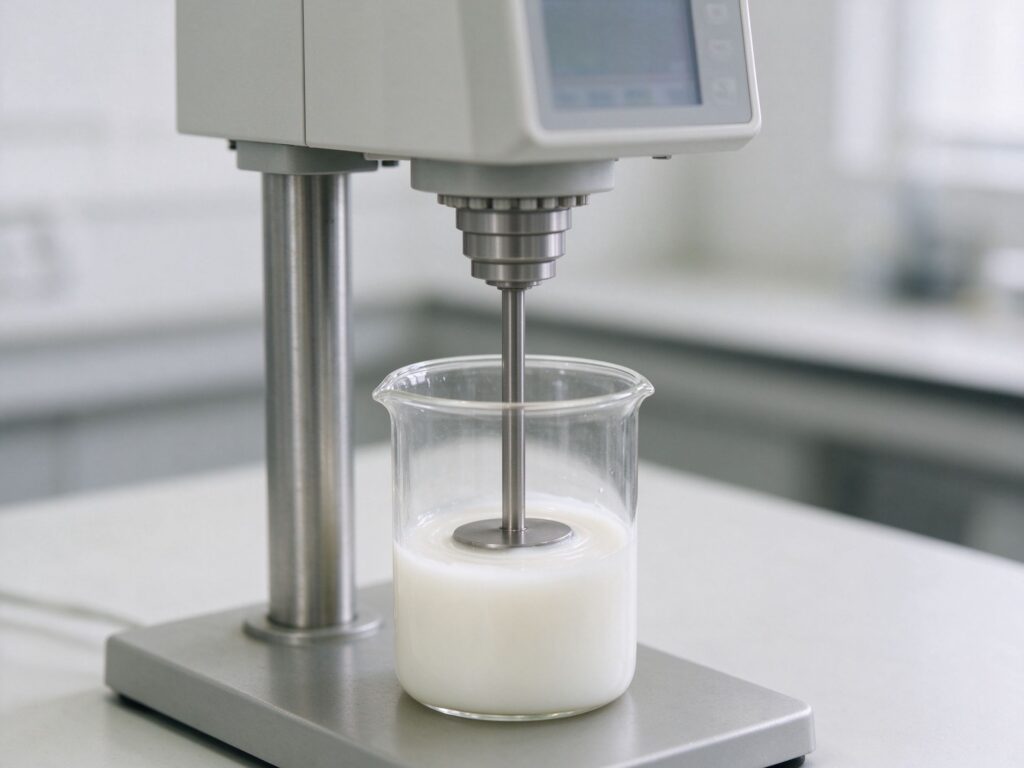
When comparing products, start with the properties that affect your application. A technical data sheet may describe the base dispersion, a finished glue, or both. Check which material the values describe before comparing them.
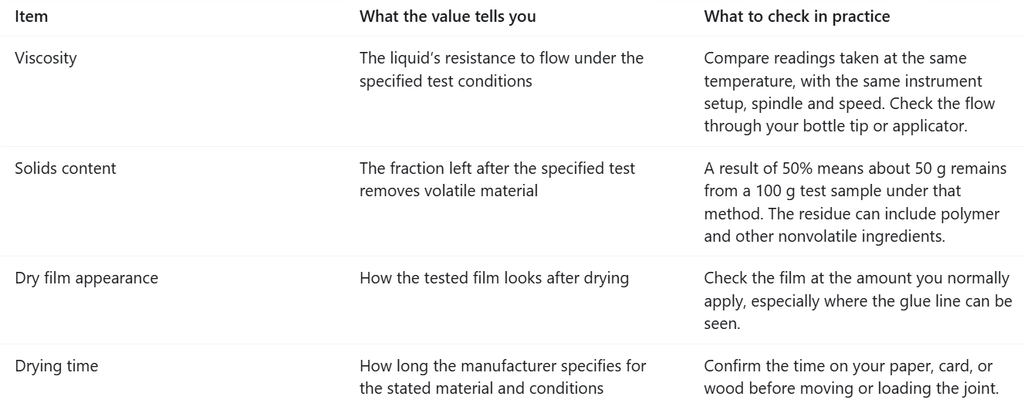
For example, FOX lists 90,000–140,000 cP for one general-purpose PVAc adhesive designed for a brush or glue spreader. The stated test uses a Brookfield RVT at 28°C, with spindle 7 at 20 rpm. If a second data sheet uses a different spindle or speed, check the methods before comparing the numbers. That range belongs to the FOX grade. For craft glue in a squeeze bottle, the dispensing test still needs to use the intended nozzle.FOX PVAc technical data sheet
4.What Happens Between the Two Sheets of Paper?
Go back to the cutout. The wet glue first has to spread across the contact area. Because uncoated paper absorbs water, some water moves into the paper while some is lost by evaporation. As the dispersion concentrates, the polymer forms a film that holds the two surfaces together. The middle of a thick or covered glue line can take longer to dry than the exposed edge. Bostik’s craft glue sheet lists approximately 12 hours on paper or card and 24 hours on wood for full cure for that specific product.
To see how surface finish affects the result, try two small samples. Keep the same glue, spread amount, overlap and inspection time. Use bare card for one joint and the actual coated or laminated face for the other, provided the product instructions cover that use. After drying, gently peel each sample and look at the two faces. Did paper fibers pull away? Did the adhesive lift from one surface? Did it split and leave residue on both sides? Record where the joint failed. This informal comparison helps you decide what to investigate next. For a production specification, use an agreed test method and acceptance criteria.
5.Environmental Questions Worth Asking
What leaves the factory process?** Screen residue, leftover batches, and wash water from vessels or transfer lines are material streams a manufacturer can track. When a plant evaluates a new process, it can compare how much cleaning water it generates, what is in that water, and how it is collected and treated. The same exercise can show how much material is lost between making a batch and filling bottles.
What does the product claim measure? Water-based describes the liquid medium. VOC content is measured using a defined method and is assessed against the requirements for the applicable product and market. Indoor emissions describe what a product releases under specified test conditions. A water-based craft adhesive and a flooring adhesive may call for different documentation because their intended uses differ. Read the technical data sheet for performance, the safety data sheet for handling and disposal information, and the relevant test report for a specific content or emissions claim.
6.Frequently Asked Questions
Is PVA glue the same as PVAc white glue?
Craft labels often use PVA glue for a product based on polyvinyl acetate. Technical references also use similar shorthand for polyvinyl alcohol, written here as PVOH. Check the manufacturer’s description of the formulation, especially when you are comparing raw materials or technical data sheets.
Why has glue hardened around the nozzle while the bottle still squeezes easily?
The thin layer on the exposed tip can lose water and form a film. The glue inside has much less exposure to air when the container is closed. Wipe the nozzle and close it as the manufacturer directs.
Can I use craft white glue on laminated card or a wooden joint?
Check whether the specific product lists the surface and intended use. The finish changes how the glue spreads and dries. A wooden joint that will carry a load or encounter frequent moisture calls for a grade specified and tested for those conditions.
7.From the Glue Bottle to the Bond
Start the next glue comparison with the actual materials and the way you will apply it. Check that the bottle or machine delivers a consistent amount, give the joint the specified drying time, and look at the bond after drying. A project with a visible glue line will put extra weight on the dry appearance. A fast production line may put more weight on application consistency and the time needed before the next operation.
For a paperboard example that applies these ideas to different box structures and finishes, see Taiwei’s guide to folding carton packaging.