
Rigid boxes are widely used for gifts, jewelry, cosmetics, watches, and product sets. Along with the paper, color, and finish, the box structure shapes how customers open the package, remove the product, and interact with the presentation.
Magnetic closure, drawer, and lift-off lid boxes are three common rigid box styles. None is automatically the best choice for every product. The right structure depends on the product’s size and shape, the desired opening experience, the insert, and how the package will be used.
In This Guide
- What are rigid box styles?
- Magnetic closure boxes
- Drawer boxes
- Lift-off lid boxes
- Side-by-side comparison
- How to choose a box style
- What to confirm before ordering
- FAQ
What Are Rigid Box Styles?
Rigid boxes are made with a firm board structure and finished with a wrapped outer paper or other surface material. Unlike folding cartons that are assembled from a folded blank, rigid boxes are designed to retain a defined shape.
The three structures in this guide differ mainly in how their lids and bases work:
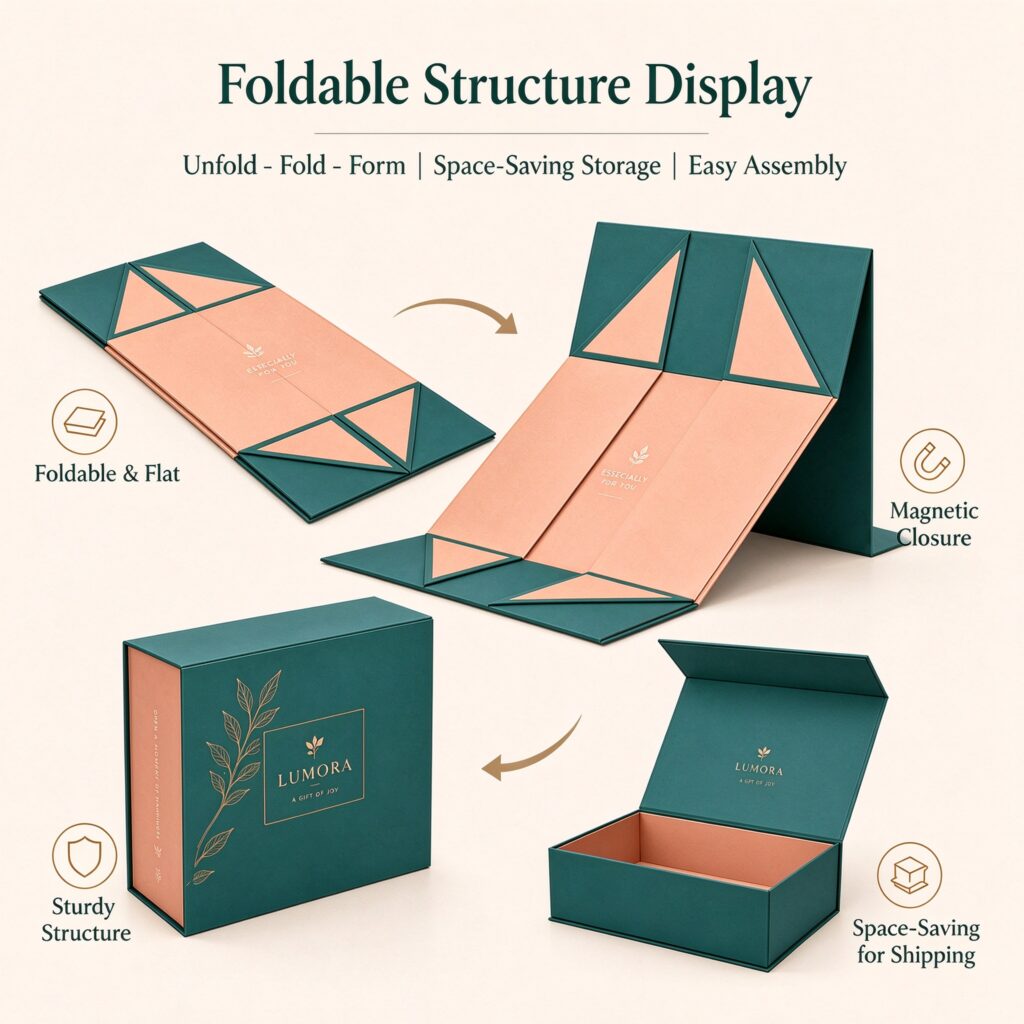
- Magnetic closure box: A hinged cover remains attached to the box body and closes with a magnetic mechanism.
- Drawer box: An inner tray slides out of an outer sleeve.
- Lift-off lid box: A separate lid lifts off the base.
Taiwei Package’s product pages show examples of magnetic closure boxes, lift-off lid boxes, and a drawer-style jewelry box. These examples can help buyers visualize the different opening structures.
For a broader overview of rigid boxes and how they differ from folding cartons, see the Paperboard Packaging Council’s guide to rigid boxes.
1. Magnetic Closure Boxes
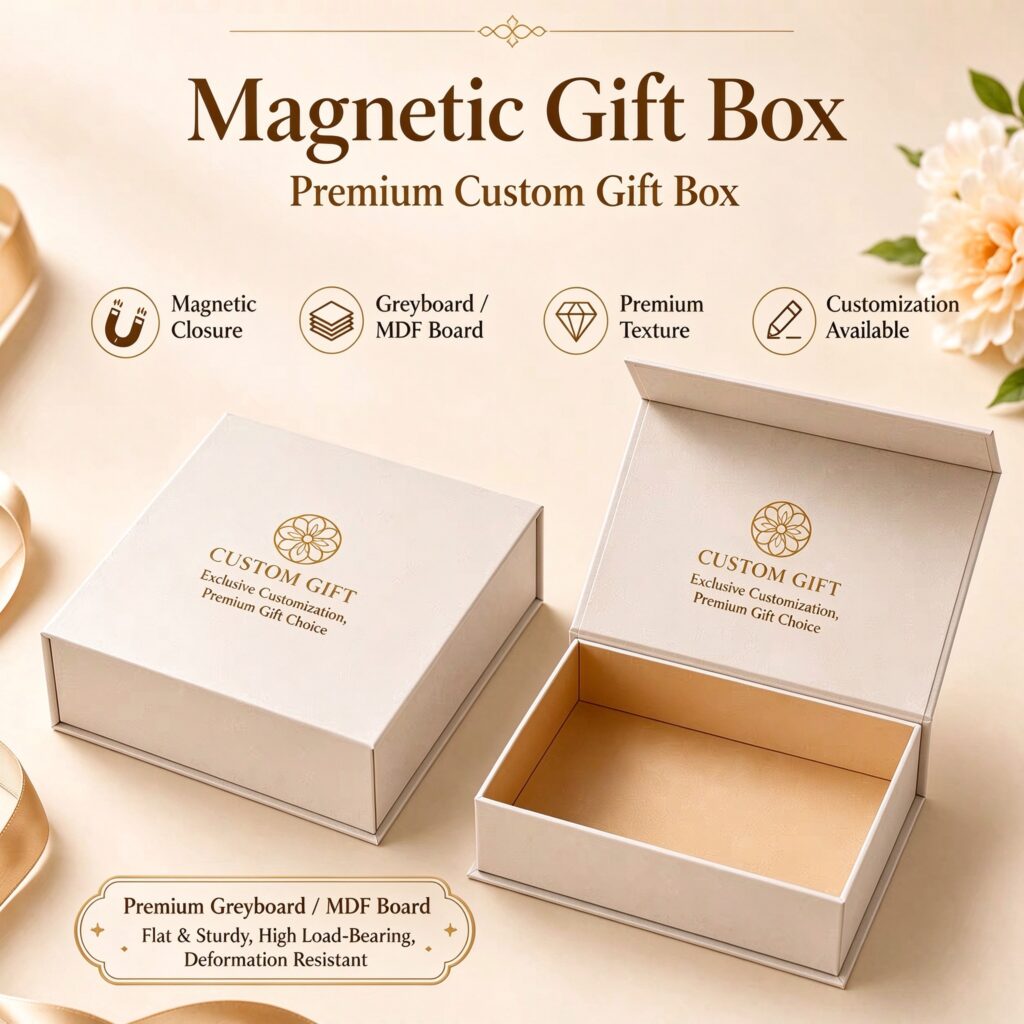
A magnetic closure box usually has a hinged cover attached to the box body. Magnets help keep the cover closed. To open the box, the customer lifts the cover; when finished, the cover folds back down.
Key Features
- The cover stays connected to the box body.
- Opening the cover reveals the product and insert from above.
- The closing action is built into the box structure.
- The cover and interior can be designed as part of a coordinated presentation.
Taiwei Package’s magnetic-box range includes different product examples, such as a kotak penutup magnetik for tableware and a flip-top magnetic gift box.
What to Consider
Start by checking how the product will sit inside the box. If it needs an insert, plan the insert and box together so the product remains in position and is visible when the cover opens.
Also consider the direction and clearance of the hinged cover. Will the open cover block the product? Can the customer remove the product easily? Does the box need to remain open for display? A sample with the real product can answer these questions more reliably than a rendering alone.
A magnetic closure box may suit projects where the attached cover, hinged opening, and coordinated interior presentation are important.
2. Drawer Boxes
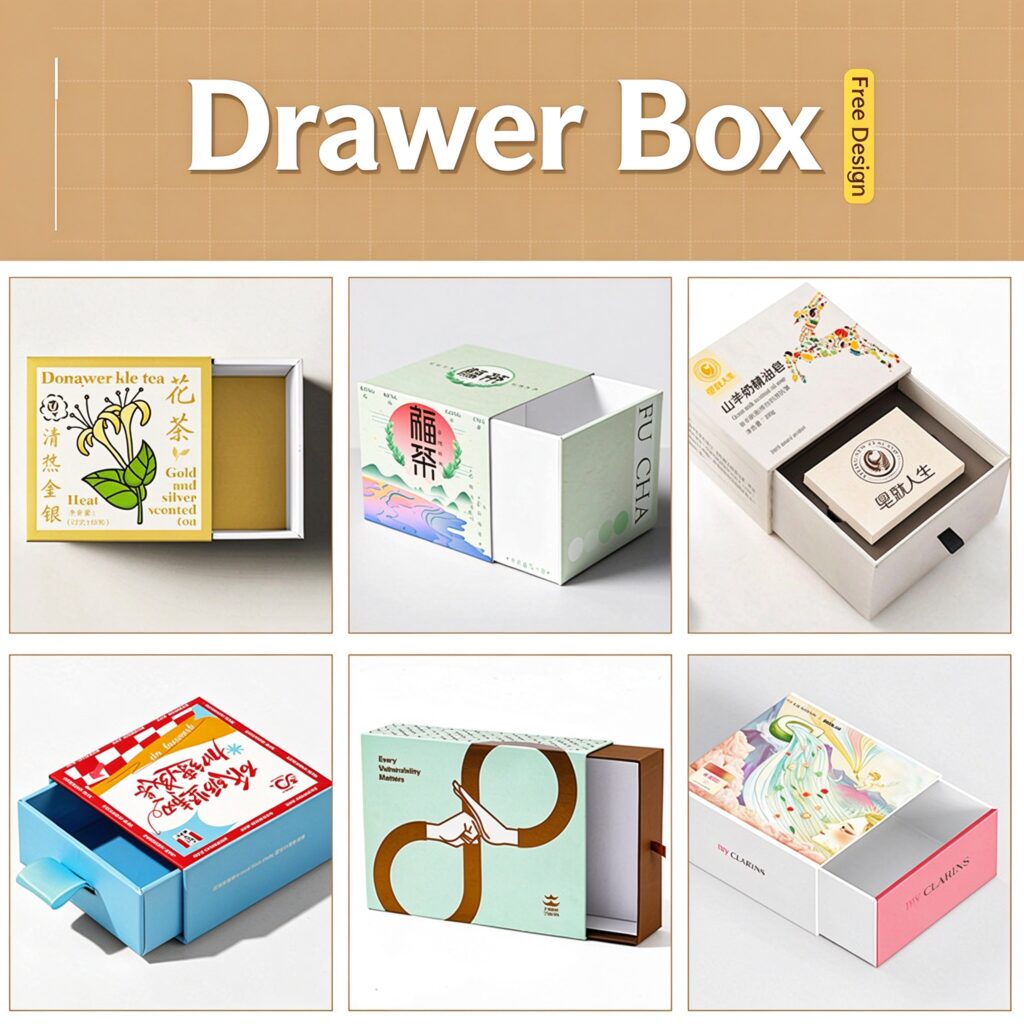
A drawer box generally consists of an outer sleeve and an inner tray. The customer pulls the tray out of the sleeve to reveal the product.
Key Features
- The outer sleeve and inner tray form the main structure.
- The product sits in the sliding tray.
- Opening involves pulling the tray out rather than lifting a hinged cover.
- The sleeve and tray can be designed to create a layered reveal.
Paket Taiwei has a drawer-style jewelry box example that shows this type of structure.
What to Consider
The fit between the sleeve and tray affects how the box slides. Consider where the customer will grip the tray, how far it needs to extend, and whether the product will be easy to remove once the tray is open.
If the box contains several products or accessories, decide how each item should be arranged. Check whether dividers or an insert are needed, whether the items remain in place as the tray moves, and whether the contents are easy to understand at first glance.
A drawer box may suit projects where a sliding reveal, an organized tray, or a layered presentation fits the product and customer experience.
3. Lift-Off Lid Boxes
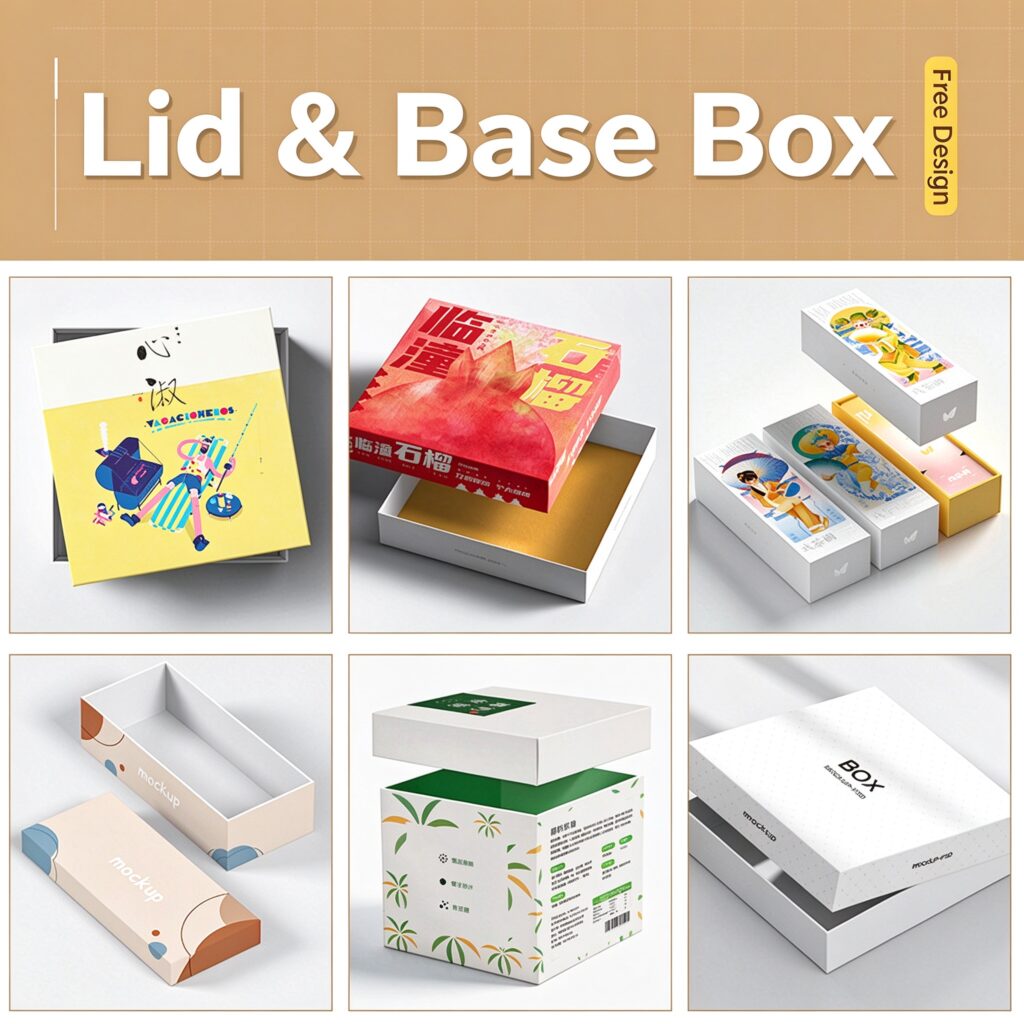
A lift-off lid box has two separate parts: a base and a lid. The customer removes the lid by lifting it away from the base, then takes the product out.
Key Features
- The lid and base are separate components.
- Opening is direct: lift the lid to access the product.
- The lid and base can be designed to work together visually.
- An insert or divider can be added to organize the contents.
Taiwei Package’s lift-off lid box category includes examples for different packaging uses, including jewelry and chocolate boxes.
What to Consider
Check how the lid fits over the base and whether customers can open and close it comfortably. Product height, insert height, and the depth of the lid all affect the fit.
Test the complete package with the actual product and insert. For example, confirm that the lid closes without pressing against the contents, and that lifting the lid does not pull the insert or product upward with it.
A lift-off lid box may suit projects that call for a separate lid and base and direct access to the product from above.
Magnetic vs. Drawer vs. Lift-Off Lid Boxes
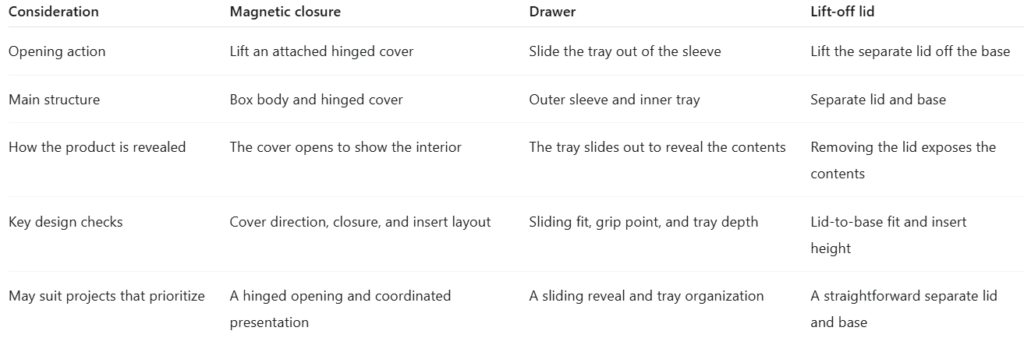
This comparison is a starting point, not a guarantee that one structure will work for every product. Dimensions, board construction, inserts, and design details affect the final result.
How to Choose the Right Rigid Box Style for Your Product
Start With Product Size and Shape
Record the product’s length, width, height, weight, and shape. Note any protruding parts, accessories, or components that need to be held separately. Then consider how the product will enter and leave the box.
Do not choose the box size based only on the product’s outside dimensions. An insert, card, divider, or accessory compartment takes up space and changes the internal layout.
Think About the Opening Experience
Consider what customers should see first when they open the package.
- A hinged magnetic cover opens while remaining attached to the box.
- A drawer tray reveals the contents as it slides out.
- A lift-off lid reveals the contents when the lid is removed.
The structure alone does not determine the overall presentation. The insert, product orientation, colors, and opening clearance all contribute to the experience.
Consider How Customers Will Remove the Product
The product should be easy to take out without disturbing other items.
A product intended to be lifted from above may work well in a lift-off lid or magnetic closure structure. A product arranged in a tray may suit a drawer design. For sets, consider whether each item needs its own position and whether customers can remove one item without moving the rest.
Test the opening and removal process with the actual product rather than relying on a product photograph or a digital mockup.
Plan the Insert With the Box
An insert can help position the product, separate accessories, or present the contents. The insert and outer box should be planned together.
Ask:
- Does the product move inside the box?
- Does the insert hold the product securely without blocking it?
- Does each accessory have a defined position?
- Can the customer remove the product without difficulty?
- Does the insert interfere with opening or closing the box?
Paket Taiwei shows an EVA insert watch box example. The appropriate insert material and structure still depend on the requirements of each project.
Match the Structure to the Use Case
A gift or retail presentation may prioritize the opening sequence and how the product is displayed. A box intended for repeated use may need a convenient way to open and close, plus enough room for the product to be returned to the package.
If the package will be shipped, evaluate the outer shipping packaging separately from the product box. A rigid presentation box alone should not be assumed to provide a particular level of shipping protection.
Consider the Full Set, Not Just the Empty Box
A box can appear spacious when empty but feel crowded once the product and accessories are inside. Before finalizing the structure, check the complete layout:
- Product position
- Insert height and cavity shape
- Accessory placement
- Space for cards or printed materials
- How the lid or tray moves
- Whether the finished package can be packed efficiently
This review helps identify problems before the box design is finalized.
What to Confirm Before Ordering a Custom Rigid Box
Prepare the following information before discussing a custom box project with a supplier:
- Product details: Dimensions, weight, shape, photos, and any accessories.
- Preferred structure: Magnetic closure, drawer, lift-off lid, or a request for a recommendation.
- Insert requirements: Whether the product needs to be positioned, separated, or displayed in a particular way.
- Use case: Retail display, gifting, storage, or e-commerce fulfillment.
- Appearance: Colors, artwork, logo placement, and finishing preferences.
- Approval process: What needs to be confirmed in the artwork and sample before production.
Taiwei Package’s FAQ page says samples can be made for customer confirmation and that production follows the confirmed sample. Discuss sample arrangements and project-specific requirements directly with the supplier.
Common Selection Mistakes
Choosing by Appearance Alone
A rendering can show the exterior but cannot fully demonstrate whether the box opens comfortably, whether the insert interferes with the product, or whether the product is easy to remove. Test the sample with the real contents.
Choosing the Insert Before the Box Structure
The insert and internal box dimensions are connected. If the box structure or dimensions change later, the insert may need to be reviewed too. Plan the product, insert, and outer box as one package.
Treating the Box Style as a Performance Guarantee
“Magnetic,” “drawer,” and “lift-off lid” describe how a box is structured. They do not, by themselves, establish a specific load capacity, compression resistance, or level of shipping protection. If the project has protection requirements, explain them to the supplier and confirm the design through an appropriate sample or test.
Forgetting the Customer’s Hand Movements
A package should be considered from the customer’s perspective. Is it intuitive to open? Can the product be removed without a struggle? Can the box be closed again neatly? These practical details matter alongside the appearance.
Leaving Too Little Room for Accessories
Cards, cables, leaflets, or small components can affect the internal layout. Confirm what goes into the package before deciding the insert and box dimensions.
Frequently Asked Questions
What is the difference between a magnetic closure box and a drawer box?
The main difference is how each box opens. A magnetic closure box typically opens with a hinged cover that stays attached to the box body. A drawer box opens when the inner tray slides out of the outer sleeve. The right choice depends on product placement, presentation, and how customers will access the contents.
What is a lift-off lid box?
A lift-off lid box has a separate lid and base. The customer lifts the lid to access the product. The fit between the lid and base, as well as the height of the product and insert, should be checked in a sample.
Which rigid box style is best for a gift set?
There is no single best style for every gift set. Magnetic closure, drawer, and lift-off lid boxes can all be considered. Choose based on the number and arrangement of products, the desired opening experience, the insert layout, and how the gift should be presented.
What information should I prepare before requesting a quote?
Prepare the product’s dimensions, weight, photos, accessory list, preferred box structure, insert requirements, order quantity, and appearance preferences. If you have not selected a structure, share the product details and intended use so you can discuss possible options.
Kesimpulan
Magnetic closure, drawer, and lift-off lid boxes differ mainly in how customers open the package and remove the product. Compare them by product dimensions, opening action, presentation, insert layout, and intended use.
If you are unsure which structure fits your project, prepare the product details and discuss the box and insert together. You can also browse our examples of magnetic closure boxes, lift-off lid boxes, and drawer-style boxes.