
As a fundamental carrier in modern commodity circulation, packaging bags directly determine the storage safety and transportation efficiency of products. In the food packaging industry, liquid packaging bags are widely used for the end packaging of liquid foods such as soybean milk, milk, fruit juice and condiment sauces, thanks to their excellent sealing performance and portability. Their design needs to meet multi-dimensional requirements including tightness, load-bearing capacity, material barrier properties and printability. Adopting a multi-layer composite structure and specialized craftsmanship, these bags can shield contents from external contamination and adapt to the physical properties of different liquids, making them an essential supporting product for the modern food industry. The material selection and manufacturing processes of packaging bags have a direct impact on product shelf life and consumer experience.
I. Technical Principles and Structural Design
The core of liquid packaging bags lies in their multi-layer composite structure. Take the common four-layer aluminum foil composite structure as an example: it is generally bonded from four materials — PET (Polyester Film), AL (Aluminum Foil), CPP (Cast Polypropylene Film) and PE (Polyethylene Film) — via solvent-free high-speed lamination technology.
The PET layer serves as the printing substrate and delivers puncture resistance;
The aluminum foil layer acts as a barrier to effectively block light, oxygen and water vapor, thus extending the shelf life of food;
The CPP layer enhances heat-sealing performance;
The PE layer is the inner layer in direct contact with food and must comply with food safety standards.
This layered design ensures superior sealing performance, while the complementary properties of different materials improve overall performance.
II. Key Processes and Functional Implementation
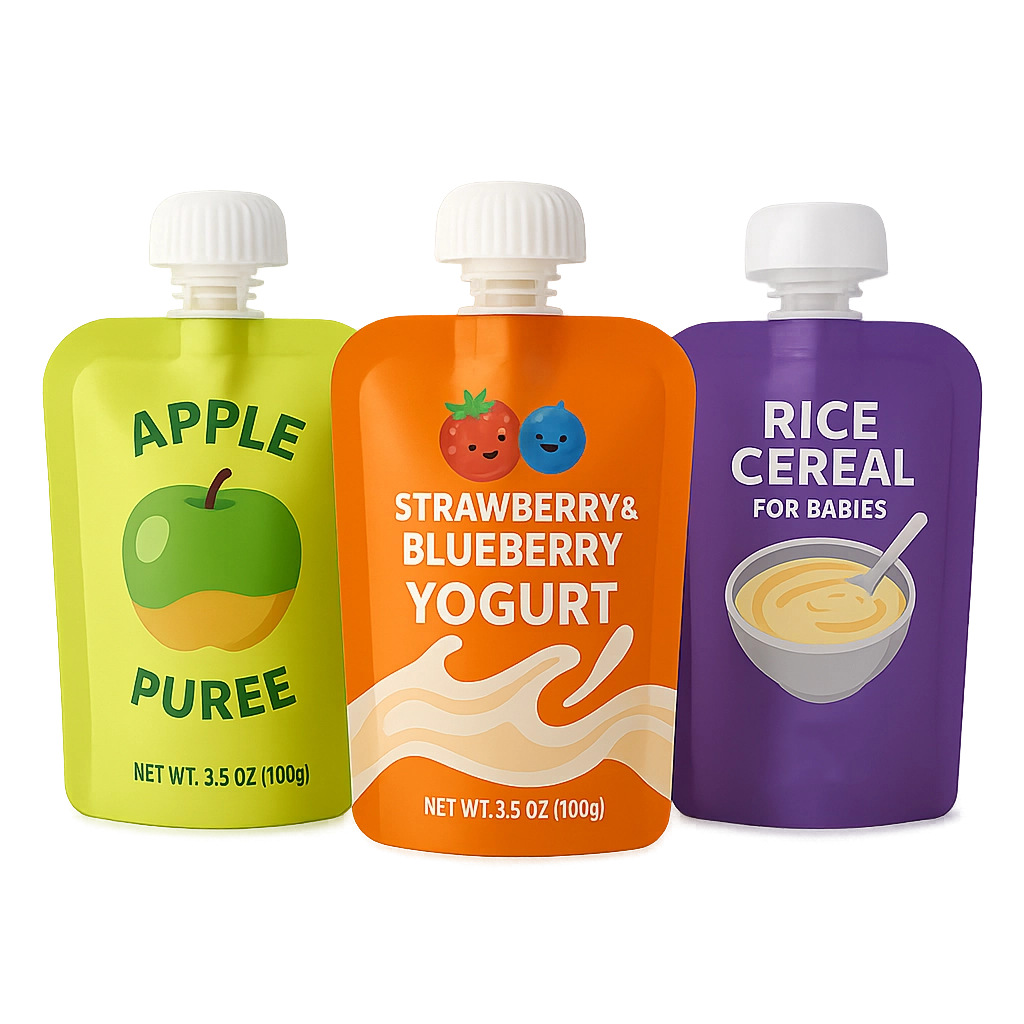
The production of liquid packaging bags involves core technologies such as gravure UV printing, digital overprinting and solvent-free lamination. Gravure UV printing transfers patterns onto the PET film through high-precision gravure cylinders. Combined with UV curing technology, it delivers vivid colors and scratch-resistant printed surfaces. Digital overprinting enables rapid plate replacement for small-batch orders and cuts customization costs. Solvent-free lamination bonds material layers by physical means, eliminating the risk of organic solvent residues found in traditional solvent lamination and fully meeting food safety standards.
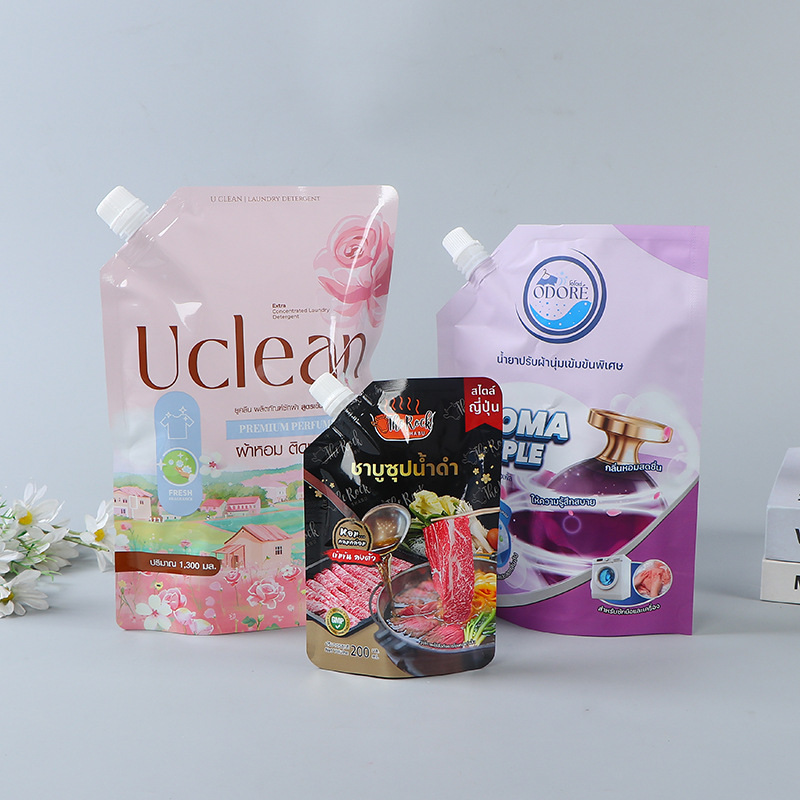
In addition, spout pouches are fitted with rigid spouts on the top, which facilitates controlled pouring of liquid contents. They are especially ideal for separate servings of viscous liquids like soybean milk and milk.
III. Material Selection and Customization Rules
Material selection dictates the applicable scenarios of liquid packaging bags. For instance, the PET/AL/CPP/PE combination is suitable for fruit juice and condiment sauces that require long-term fresh-keeping. Recycled materials can be used for non-barrier layers to reduce costs, yet virgin materials are mandatory for food-contact inner layers to guarantee safety.
In terms of dimensional customization, the width, length and thickness of the bags can be adjusted according to product capacity. The eight-side sealed flat-bottom design expands the supporting area at the bottom, allowing the bags to stand upright and boosting shelf display effects. Moreover, color printing clearly presents brand logos, nutrition facts and other information. Complimentary design services further lower the packaging threshold for small and medium-sized brands.
IV. Application Scenarios and Usage Specifications
Liquid packaging bags are mainly applied to the end packaging of food products, and are required to withstand high and low temperatures as well as punctures. For example, soybean milk spout pouches must pass the 121°C high-temperature retort test to avoid deformation during sterilization. Packaging for frozen foods needs to remain flexible at -18°C.
During use, keep sharp objects away to prevent scratches on the bag surface. Store the packages away from strong direct light and high-temperature environments. For oil-containing liquids, select CPP or PE materials with superior oil resistance to prevent chemical reactions between the packaging and contents.
Taiwei Embalaža is a professional packaging manufacturer integrating design, production and sales. With over 30 years of industry experience, we specialize in delivering tailored packaging solutions for small and medium-sized enterprises worldwide.
Our product range covers various packaging boxes for food, cosmetics, daily necessities, high-end luxury goods and more. Adhering to the philosophy of Quality First, Service Supreme, we rely on strict quality control and robust production capabilities to provide reliable packaging solutions for global clients.