
You taste a coffee at the roastery and remember its bright citrus aroma. A few days later, a bag from the same roast batch arrives at your door. The bag feels puffy, yet the citrus note is harder to pick out when you grind the beans. What changed between the roastery and your kitchen?
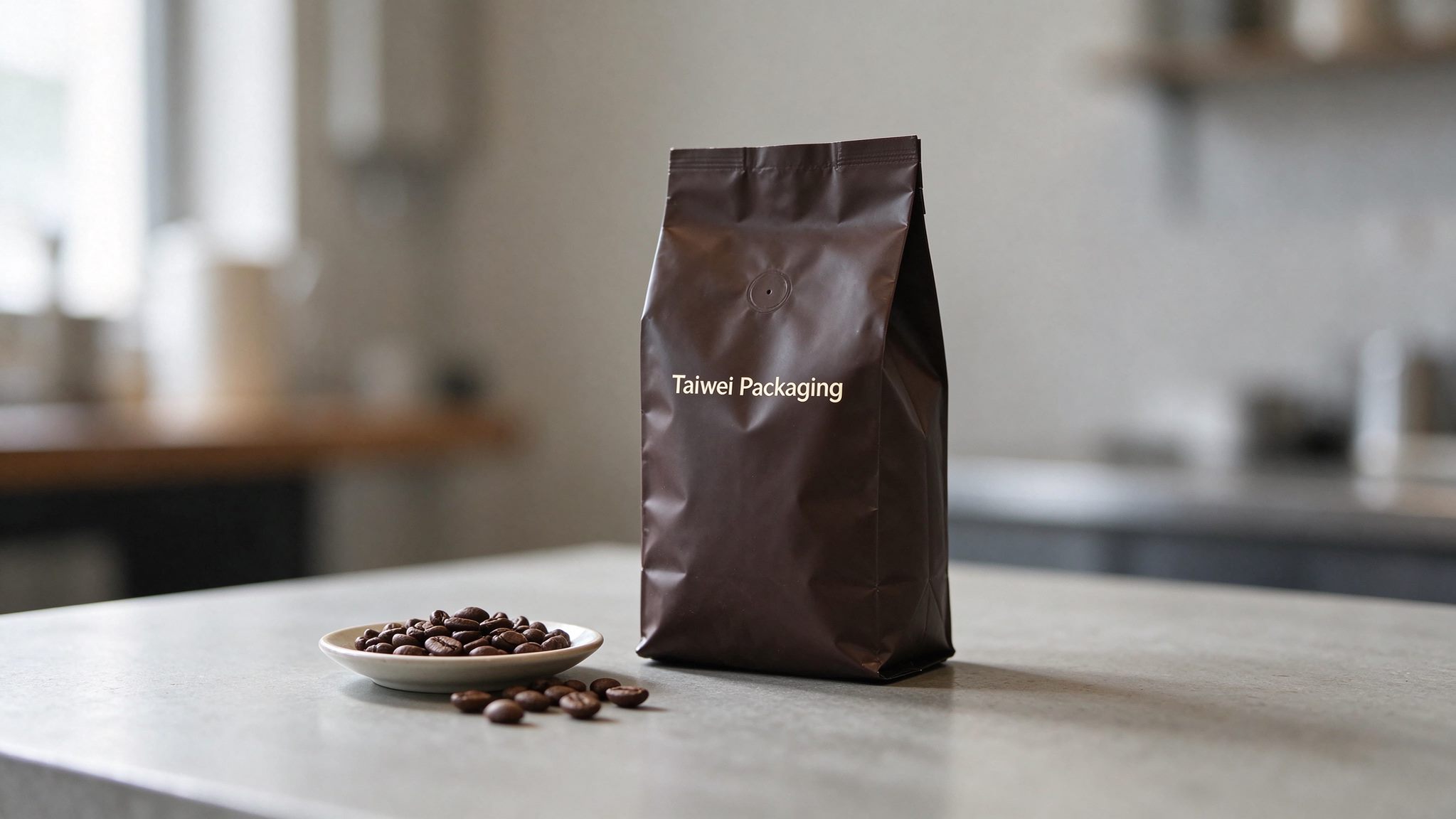
Coffee degassing after roasting is the release of gas, mostly carbon dioxide, that formed during the roast. When enough gas accumulates inside a sealed pouch, the bag can puff up. At the same time, some aroma compounds escape or change during storage. A bag can therefore get fuller while a particular aroma gets weaker. To find out what happened to the coffee, compare the beans under the same brewing conditions and use the package as one piece of evidence.
Innehållsförteckning
- What Roasting and Cooling Do to a Coffee Bean.
- How a roaster checks and retains a batch.
- Coffee degassing after roasting and why aroma changes.
- What the bag film, heat seal, and valve each do.
- How to investigate a puffy bag and weaker aroma.
- How to store roasted coffee beans after opening.
- What to check from roaster to cup.
- Frequently asked questions.
- Outer packaging for sealed coffee bags.
1. What Roasting and Cooling Do to a Coffee Bean
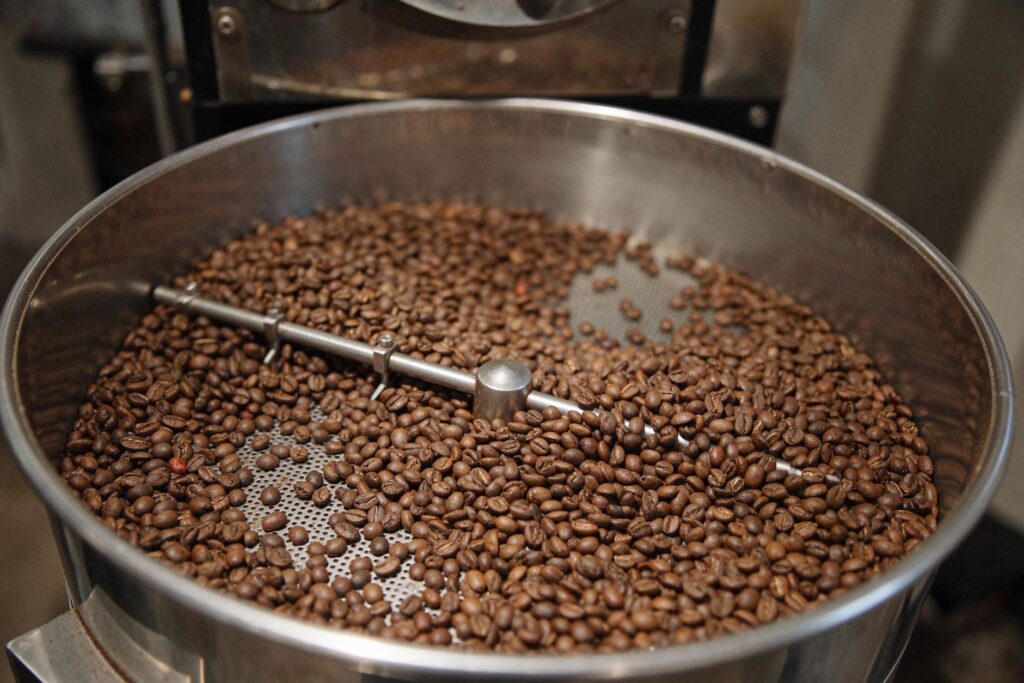
In the roaster, green coffee loses moisture, expands, and develops a more porous structure. Heat-driven reactions create many of the compounds responsible for roasted coffee aroma. They also generate gases. Some gas leaves during roasting, while some remains inside the bean and gradually escapes after the roast.
Cooling marks the start of a useful production distinction. The roaster can use air to control residual heat, then manage coffee degassing after roasting through the timing and design of the pack.
When the beans reach the intended roast endpoint, the roaster can transfer them to a cooling tray and draw air through the batch to carry away residual heat. This limits further roast development. Once the beans feel cool, gas still has to travel out through their internal structure. Roast degree and roast speed both influence coffee degassing after roasting, so two coffees with the same roast date can behave differently in the bag.
2. How a Roaster Checks and Retains a Batch
Suppose a roaster wants a whole-bean coffee to deliver a distinct citrus note and mild caramel sweetness. Batch checks establish how close the coffee is to that target and give the roaster something to compare with if a customer later reports a difference.
| Check | What to record | What it helps you decide |
|---|---|---|
| Roast record | Link the green coffee lot, roast batch, roast profile, and cooling record. | Whether an unusual result coincides with a change in the raw coffee or the roast. |
| Roast color | Use the same sample preparation and measurement method each time. Compare whole-bean readings with whole-bean readings, and ground readings with ground readings. | Whether the roast level is consistent with the target and previous batches. |
| Batch cupping | Taste at a defined time after roasting. Record dry fragrance, brewed aroma, sweetness, and any unexpected notes under consistent conditions. | Whether the batch delivers the intended sensory profile when released. |
| Unopened retain sample | Keep a sealed bag from the sale batch with the same fill weight, pouch, and packing process. Record its pack date and storage conditions. | Whether a delivered bag differs from a reference of the same roast age. |
A note such as “citrus weaker in the dry grounds, sweetness unchanged in the cup” is easier to work with than “less fresh.” It tells the team where to look during a side-by-side tasting. A retained bag also lets the team compare package appearance at the same roast age, which matters if the complaint involves coffee degassing after roasting.
3. Coffee Degassing After Roasting and Why Aroma Changes
Carbon dioxide leaves the bean
Gas trapped in a whole bean gradually makes its way out. Grinding breaks the bean into smaller particles and gives that gas shorter paths to escape. Some of the release happens during and shortly after grinding. Gas also escapes when hot water hits the grounds, contributing to the bubbles you see during a pour-over bloom. Roast profile, grind, and brewing conditions all affect the appearance of that bloom.
Aroma compounds change during storage
Coffee fragrance comes from many volatile compounds. Some gradually escape from the beans, while others react during storage. Oxidation can contribute to stale notes as the balance of aromas shifts. You might still smell the roasted character while noticing that a floral or citrus note is harder to find. Studies that compared aroma compounds and sensory responses in stored whole beans found that storage temperature, time, and roast level influenced the results.
The two processes can overlap. Coffee degassing after roasting can change the shape of a pouch even as the aroma you remember from the roastery becomes less distinct.
4. What the Bag Film, Heat Seal, and Valve Each Do
The valve manages pressure from coffee degassing after roasting. The film provides a barrier during storage, and the heat seal closes the filling opening. When you change one of these parts, evaluate the filled package as a whole.
- One-way valve. The valve opens when the pressure inside the bag exceeds outside pressure by enough to trigger it. It closes again as the pressure difference falls, limiting reverse airflow through the valve. A working valve can therefore coexist with some puffiness. For a new valve or bag format, ask the supplier about opening pressure and venting capacity, then test with the coffee and fill weight you actually sell.
- Bag film. If you are comparing materials, request oxygen and water vapor transmission data and check the test conditions behind them. If a proposed material change reduces packaging weight or changes disposal options, include a side-by-side sensory check at the end of your expected storage and shipping period. That tells you whether the change suits the coffee you sell.
- Heat seal. Check whether the seal runs continuously across the opening. Look for folds, trapped coffee fragments, or locally unsealed areas. If several bags from the same packing run show similar damage, retain unopened samples and arrange an integrity check that examines both the seam and the valve attachment.
To choose a packing time, split one batch into two groups and pack them at two feasible times. Keep fill weight, pouch, and storage conditions consistent. On the same day after roasting, compare bag shape, seal condition, and cup profile. This trial shows how coffee degassing after roasting affects your actual pack and whether either packing schedule better suits your order cycle.
A one-way coffee bag valve also needs clearance after packing. If a paper tube or a tight shipping carton presses directly on it, check the filled pack again under the way it will actually be stored and handled.
In storage, rotate stock by roast date and keep it away from sustained heat. During shipping, the outer carton helps protect the pouch from handling and compression. For a gift tin or paper tube, test the fit with a filled pouch so the opening leaves enough room to insert and remove it without pressing on the valve or folding the seal edge.
5. How to Investigate a Puffy Bag and Weaker Aroma
Consider the customer who tried the coffee at the roastery and later brewed the same batch at home. The two cups were made on different equipment. Before you attribute the change to transport or coffee degassing after roasting, check whether the difference can be reproduced.
- Capture the delivery condition. Ask for the batch code, roast date, delivery date, and when the bag was opened. Request photos of the top seam, the area around the valve, and the outer carton. Treat a split seam, puncture, or visible damage around the valve as a packaging issue to document and investigate. Record puffiness alongside those observations.
- Compare the returned coffee with the retain sample. Brew both on the same day using the same grinder, water, ratio, and temperature. If possible, label them with codes and taste blind. Record whether the difference appears in the dry grounds, the brewed aroma, or the cup. If the returned bag was open for several days, document how it was stored.SCA sample preparation and tasting standards
- Follow the comparison. If both cups miss the target, revisit the release cupping, roast record, and any shared storage conditions. If the retain sample still matches the target and the return differs, investigate that package, its shipping conditions, and its handling after opening. If the samples taste similar under controlled conditions, ask the customer to try the same recipe and see whether the difference returns.
- Run a paired shipment if the issue repeats. Send a sample on the route in question and keep a second bag from the same batch and packing run at the roastery. Record transit time and, where practical, temperature exposure. Taste both at the same roast age. This checks whether the difference recurs on that route and helps focus the next investigation.
If you are investigating why coffee bags puff up across several shipments, record whether the same pouch format and fill weight were used. That helps separate variation in coffee degassing after roasting from a change in how much room the bag leaves for gas.
A single side-by-side tasting can narrow the possibilities. Repeated results under controlled conditions give the roaster a stronger basis for changing packing, shipping, or storage.
6. How to Store Roasted Coffee Beans After Opening
Opening the factory seal starts a different stage of storage. Each time you take out a dose, the beans can be exposed to more air. If the original bag closes reliably, reseal it after each use and keep it in a cool, dry place. If the bag is difficult to close, use a clean, dry container with a lid that seals well. If you brew only occasionally, buying smaller quantities can shorten the time each opened bag stays in use.
One study compared four ways of storing whole roasted beans after opening: transferring them to an airtight canister, closing the original bag with tape, closing it with a clip, and using a bag with an integrated screw cap. The screw-cap package performed best overall under the study conditions. For a roaster, that finding gives a concrete reason to test the reclosure on a retail bag under normal daily use.
For a buyer comparing roasted coffee freshness across bags, record the opening date as well as the roast date. Two bags of the same age can have different storage histories once one has been opened for daily use.
If you want to find when a particular coffee tastes best to you, start with the roaster’s guidance and brew it at several points using the same recipe. Record fragrance, sweetness, and aftertaste. Keep separate notes for pour-over and espresso if you use both. The result is a useful reference for that coffee and your brewing setup.
7. What to Check From Roaster to Cup
Coffee degassing after roasting explains how carbon dioxide can build up in a bag. The aroma you taste also depends on the roast, the time and conditions the beans spent in storage, and how you brew. For a roaster, the most useful reference is a sealed retain sample linked to the batch record. For a customer, it is a consistent recipe and a record of when the bag was opened. Those references make it much easier to trace a change in the cup.
8.Frequently Asked Questions
Does a puffy coffee bag mean the beans are fresh?
Puffiness shows that gas and pressure have changed the shape of the pouch. Coffee degassing after roasting is one cause. Fill weight, valve behavior, and ambient pressure can also affect appearance. Use the roast date, storage history, and a consistent brew to assess the coffee’s flavor.
Why does a coffee bag puff up even when it has a one-way valve?
The valve needs a pressure difference to open and closes again as that difference falls. Some puffiness can persist while the beans continue releasing gas. If only a few bags from the same run are unusually tight, compare their fill weights, seams, and valves with other bags from the run.
How long should coffee rest after roasting?
Coffee degassing after roasting varies with roast degree, roast speed, and the coffee itself. Start with the roaster’s guidance and try the same recipe at different roast ages. You may prefer different points for filter and espresso.
Do I need to reseal a coffee bag if it already has a valve?
Yes. The valve vents gas through its own opening. After you take out a dose, close the bag or container to reduce air exchange through the opening you used to access the beans.
9. Outer Packaging for Sealed Coffee Bags
If you are putting together a coffee subscription, tasting set, or gift box, start with the filled, sealed coffee pouch. When you contact Taiwei about an outer tube or box, share the filled pouch’s dimensions, the number of bags per pack, and whether the finished pack will sit on a retail shelf or travel by parcel. These details help determine the fit and how customers will remove the bag.Taiwei custom paper tubes for coffee and other foods.