
Industrial tapes are used in packaging, electronics, electrical work, coating, assembly, and equipment maintenance. Although many tapes look similar, they differ in backing materials, adhesive systems, and performance. Some are designed to seal cartons, while others provide electrical insulation, mask surfaces during high-temperature processes, or help secure and protect materials on a production line.
A practical way to understand industrial tapes is to start with their intended use, then consider the backing, adhesive, surface being bonded, process conditions, and removal requirements.
How Do Industrial Tapes Support Production?
Industrial tapes can support a range of production and packaging tasks:
- Sealing packages: Closing cartons, bags, or packaging seams.
- Bundling and reinforcement: Securing items together or reinforcing parts of a package.
- Assembly and bonding: Attaching foam, film, labels, or other components.
- Electrical insulation and wire management: Wrapping, protecting, or organizing wires and electrical components.
- Process masking: Protecting selected areas during painting, soldering, or surface treatment.
- Surface protection: Reducing the risk of scratches or contamination during production, handling, and storage.
- Material splicing: Connecting rolls of paper, film, labels, or other materials during converting.
- Workplace marking: Identifying work areas, walkways, hazards, or temporary zones.
Industrial tape catalogs cover far more than packaging. Common categories include electrical, cloth, carton-sealing, foam, foil, masking, splicing, anti-slip, and surface-protection tapes.
1. Packaging, Carton-Sealing, and Reinforcement Tapes
Film carton-sealing tape
Film carton-sealing tape is commonly used to close corrugated cartons. It typically has a plastic-film backing, with products varying in film type, adhesive, and unwind characteristics. It can be applied by hand or used with carton-sealing equipment.
When selecting a tape, consider carton weight, board surface, closure method, production-line speed, and storage or shipping conditions. A tape intended for light cartons should not be assumed to perform like one designed for heavier packages. Check the specifications for the particular product.
Paper packaging tape
Paper packaging tape uses a paper backing and is used for carton sealing and other applications where a paper surface is preferred. Some products can be torn by hand, while others are designed for use with automated equipment.
A paper backing does not automatically mean that a tape is easy to remove or suitable for every recycling process. Recyclability depends on the specific product construction and local processing requirements, so check the product information.
Water-activated tape
Water-activated tape requires water to activate its adhesive before application. It is applied differently from pressure-sensitive carton-sealing tape and may require a suitable dispenser or machine. Some versions include fiber reinforcement for applications that need a reinforced closure.
Before using it on a production line, consider equipment availability, process speed, carton surface, and storage conditions.
Filament-reinforced tape
Filament tape contains reinforcing fibers, such as glass or polyester, in its backing. Depending on the construction, the fibers may run in one direction or form a cross-weave pattern.
It can be used for bundling, carton reinforcement, and transport securing. However, the word “reinforced” alone does not establish how much load a tape can handle. Performance also depends on the tape construction, surface, application method, and package design.
2. Electrical Insulation and Wire-Management Tapes
“Electrical tape” is a use-based category that includes different backing and adhesive materials. Products may be designed for wire wrapping, component insulation, harnessing, or high-temperature electrical processes, but their electrical properties and use conditions differ.
PVC vinyl electrical tape
PVC electrical tape is widely used for wrapping, identifying, or protecting wires and cables. Different products can vary in thickness, stretch, temperature performance, flame behavior, and electrical properties.
Do not assume that a tape is suitable for every voltage or environment because it is black or labeled “electrical tape.” Select it according to the product’s ratings, certifications, and the requirements of the electrical work.
Rubber-based insulation tape
Rubber-based tapes are used in certain electrical insulation, sealing, or splicing applications. Some products are applied under tension; others use different installation methods. Follow the product instructions and relevant work practices.
Glass-cloth electrical tape
Glass-cloth backings provide mechanical support. Some glass-cloth tapes are designed for electrical insulation, component securing, or high-temperature processes.
They may look similar to general-purpose cloth tape, but glass-cloth electrical tape is a specialized electrical product. It should not be treated as interchangeable with ordinary cloth tape.
Polyimide electrical tape
Polyimide tape, often called PI tape, is used in some electrical and electronics manufacturing applications. 3M lists examples including coils, transformers, wire harnesses, and printed circuit board assembly.
3. Cloth Tape, Duct Tape, and Other Fabric-Backed Tapes
The “black cloth tape with threads” you described may be black cloth-backed tape or cloth duct tape. The description alone is not enough to identify a specific product: fabric-backed tapes also include products designed for electrical or high-temperature applications.
Cloth-backed or duct tape
Cloth-backed tape typically uses a textile backing with a coating and adhesive. Depending on the product, it may be used for temporary fixing, bundling, equipment maintenance, or general wrapping. Water resistance, abrasion resistance, hand-tearability, and residue behavior vary by product.
The names cloth tape, cloth-backed tape, and duct tape are sometimes used loosely. To identify a product more accurately, check whether it tears by hand, whether the fabric weave is visible, whether the backing has a plastic coating, and whether it is mainly used for wire harnessing or maintenance work.
Gaffer tape
Gaffer tape is another fabric-backed tape, but its typical applications and design can differ from those of general-purpose duct tape. It is often used for temporary fixing and on-site setups. Adhesion and removal performance vary by product, so consult the product information.
Cloth electrical tape
Cloth electrical tape is designed for electrical applications and should not be confused with general-purpose cloth tape. A fabric texture alone does not indicate electrical insulation properties.
4. High-Temperature and Process-Masking Tapes
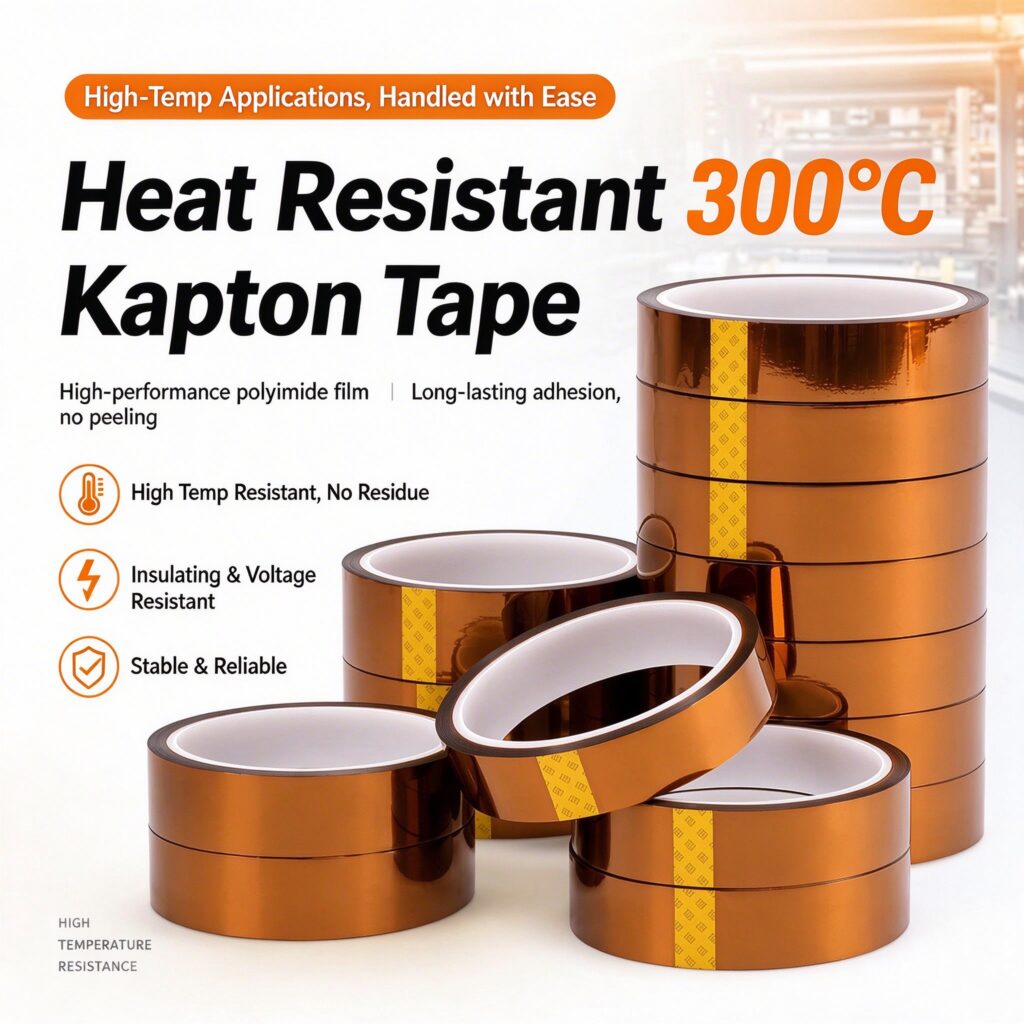
Polyimide tape, often called “Kapton” or “gold finger” tape
“Gold finger tape” commonly refers to polyimide tape used to mask or protect the gold-plated contact areas on printed circuit boards. It is also known as PI tape or high-temperature tape. In electronics manufacturing, it can be used for masking or protection during soldering processes.
3M’s technical information lists applications for protecting PCB gold fingers during wave soldering, reflow soldering, or solder dipping.
However, not every high-temperature tape is polyimide tape. Temperature resistance and suitability depend on the backing, adhesive, and specific product.
Green PET silicone high-temperature tape
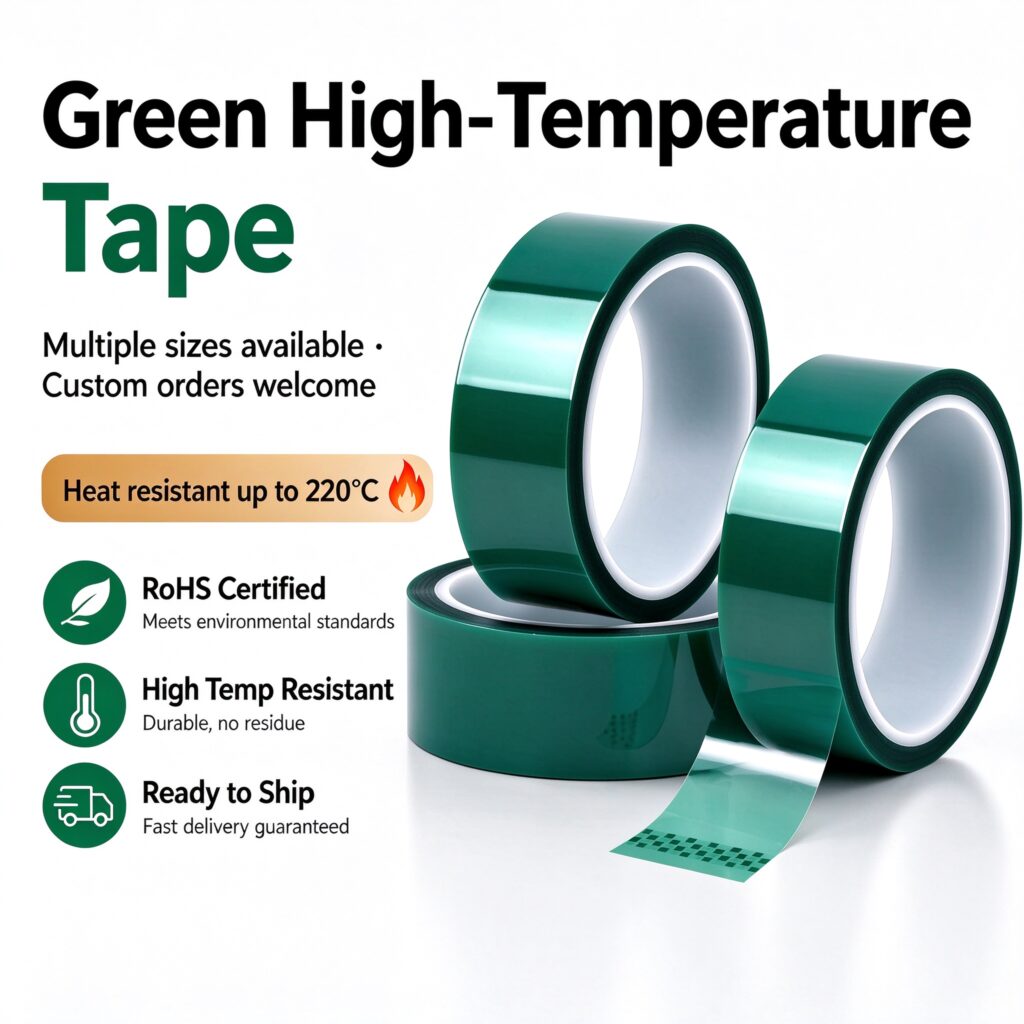
The green tape you mentioned may be a high-temperature masking tape with a polyester (PET) backing and silicone adhesive. These products are often used to mask selected areas during powder coating or paint-baking processes.
For example, tesa describes a green-translucent high-temperature masking tape made with a PET backing and silicone adhesive for powder-coating masking and surface protection. Its stated temperature capability applies to the specific product and conditions listed by the manufacturer.
Green is an identification color used by some products; it is not a performance rating. Color alone cannot confirm the backing, temperature resistance, or process suitability.
Other high-temperature masking tapes
Other constructions include glass-cloth, foil, and specialty tapes. They may be used in different painting, coating, soldering, or maintenance processes. Check the required temperature and exposure time, the surface material, adhesive behavior, and removal requirements before choosing a tape.
5. Masking Tape and Painter’s Tape
Masking tape is used to cover selected areas during painting, coating, processing, or temporary protection. Common types include crepe-paper painter’s tape, PET high-temperature masking tape, and polyimide masking tape.
Their temperature resistance, edge definition, and removal performance vary. Ordinary painter’s tape should not be assumed to replace high-temperature masking tape, particularly in baking or powder-coating processes. Use the product specifications and actual process conditions to guide selection.
6. Double-Sided, Foam, and Transfer Tapes
These tapes mainly support bonding and assembly:
- Double-sided tape: Has adhesive on both sides and bonds two surfaces together.
- Foam tape: Uses a foam layer between the adhesive surfaces and can help accommodate some surface gaps or unevenness.
- Transfer tape: Carries an adhesive layer on a release liner; during application, the adhesive transfers to the target surface. It is used in some thin-bonding and die-cutting applications.
Consider whether the two surfaces are the same or different materials, whether they are flat, how the bond will be loaded, whether there is a gap to fill, and whether the tape must later be removed.
7. Surface-Protection and Low-Friction Tapes
Surface-protection tape
Surface-protection tape helps reduce scratches or contamination during production, handling, or storage. It needs to be compatible with the surface being protected. If adhesion is too low, it may not stay in place; if adhesion or dwell time is unsuitable, removal may be difficult.
Test the tape on a small area first. Check whether it can be removed after the intended application time and whether it affects the surface.
Low-friction and wear-resistant tape
Some industrial tapes protect equipment contact surfaces, help materials slide, or reduce friction and wear. They may use low-friction backings or be designed for abrasion or chemical resistance. These tapes serve specific equipment or production-line functions and should not be treated as ordinary carton-sealing or repair tapes.
8. Foil and Other Functional Tapes
Foil tapes are used in specific sealing, shielding, insulation, or surface-covering applications. PVC marking and warning tapes identify zones or conditions, while anti-slip tapes add traction to selected surfaces.
These products are designed for different tasks. Check their compatibility with the surface, environment, and intended use.
9. Splicing and Web-Processing Tapes
In paper, film, label, and other roll-to-roll converting processes, splicing tape connects material from one roll to the next so production can continue. The suitable construction depends on the material, equipment speed, and splicing method. Selection requires understanding the actual process, rather than relying on tape width or appearance alone.
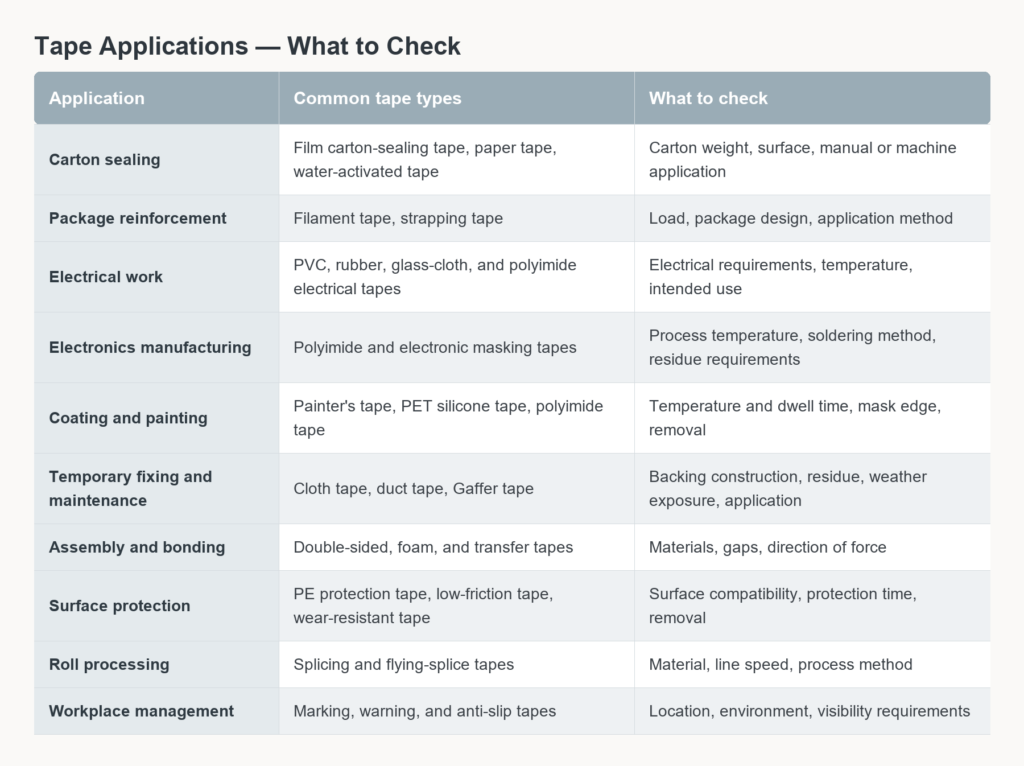
Quick Guide to Industrial Tape Categories
Six Questions to Ask Before Choosing an Industrial Tape
- What material will the tape bond to or protect? Paperboard, plastic, metal, coatings, and electronic substrates have different surface properties.
- What job must the tape perform? Carton sealing, insulation, masking, bonding, bundling, and marking are different tasks.
- What are the process temperature and exposure time? “High-temperature” performance must be assessed against both.
- Will application be manual or machine-based? Line speed, tension, and equipment can affect results.
- How long must the tape remain in place? Temporary masking and long-term bonding have different requirements.
- Must the tape be removed afterward? Confirm residue and surface-damage risks, and test a small area first.
Frequently Asked Questions
Is black cloth tape the same as electrical tape?
Not necessarily. Black cloth-backed tape may be intended for maintenance, wrapping, or temporary fixing. Cloth electrical tape is designed for electrical applications. Appearance and color do not establish insulation properties; check the product’s stated use and specifications.
Is every green tape high-temperature tape?
No. Green is a product color, not a performance rating. Some green PET silicone tapes are used for powder-coating masking, but that does not mean every green tape is heat-resistant or suitable for the same process.
Is “gold finger tape” the same as all PI tape?
“Gold finger tape” commonly refers to polyimide tape used to protect gold-plated PCB contacts, but PI tapes are not all designed for the same process. Choose a product based on the soldering method, temperature, substrate, and removal requirements.
Can I choose an industrial tape by color alone?
No. Color can help with identification or positioning, but it does not replace information about backing, adhesive, and technical specifications. Start with the application and process conditions.
Conclusion
Industrial tapes serve many purposes across packaging, electrical insulation, electronics manufacturing, high-temperature masking, surface protection, assembly, and production-line splicing. Tapes that look similar may be designed for very different processes because their backings and adhesives differ.
Start by defining the task, then check the materials, process conditions, and technical data. For electrical insulation, high-temperature work, and “gold finger” masking in particular, do not rely on color or informal names alone.
To learn more about custom paper boxes and corrugated packaging, visit our บรรจุภัณฑ์แบบกำหนดเอง services page.